Address
Building 1, Zone 1, Greenland Binhu International City, Zhengzhou, Henan, China
Work Hours
Monday to Friday: 9AM - 7PM
Weekend: 10AM - 6PM
Address
Building 1, Zone 1, Greenland Binhu International City, Zhengzhou, Henan, China
Work Hours
Monday to Friday: 9AM - 7PM
Weekend: 10AM - 6PM

Corundum bricks, primarily composed of high-purity α-alumina, possess a refractoriness exceeding 1800℃, extremely low impurity content, strong chemical inertness, and excellent high-temperature insulation properties. They are a core refractory lining material for various high-temperature sintering kilns in the electronics industry, with applications spanning the entire production chain of electronic ceramics, semiconductors, magnetic materials, and new energy electronic materials.
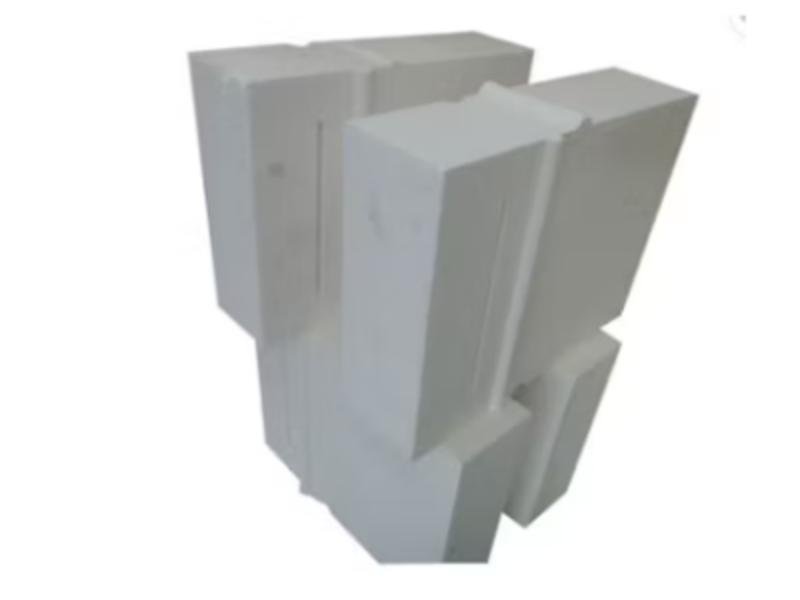
In the field of electronic ceramic sintering, corundum fire bricks are used for the lining of furnace walls, arches, and flues in the high-temperature sections of pusher kilns, roller kilns, and atmosphere tunnel kilns. They are suitable for firing piezoelectric ceramics, chip capacitors, resistance ceramics, and filter ceramic components. Their low-iron and low-alkali properties prevent impurities from precipitating and contaminating the ceramic body at high temperatures, ensuring the stability of electrical parameters such as dielectric constant and insulation resistance of components. When used with corundum-based firing plates and sagger bases, they prevent the green bodies from sticking together and interpenetrating elements, improving the yield of finished products.
In magnetic material production, high-purity corundum fire bricks are commonly used in the high-temperature zones of ferrite core and permanent magnet sintering furnaces. This resists corrosion from alkali metal volatiles during sintering, resists corrosion from reducing atmospheres, maintains its shape under long-term high-temperature loads, and prevents lining debris from contaminating the magnetic material, ensuring consistent magnetic properties such as permeability and coercivity.
In semiconductor and photovoltaic electronics, dense corundum fire bricks are used as linings in monocrystalline silicon and sapphire crystal growth furnaces, wafer annealing furnaces, and chip packaging atmosphere furnaces to meet ultra-high purity requirements and prevent impurities from contaminating silicon-based materials. Corundum lining is used in high-temperature heat treatment furnace chambers to withstand special atmospheres such as nitrogen and hydrogen, maintaining uniform and stable furnace temperature and ensuring the precision of chip annealing and oxidation processes.
In the field of lithium-ion battery new energy electronic materials, corundum bricks are used in the high-temperature section linings of ternary and lithium iron phosphate cathode material sintering kilns to prevent iron and calcium impurities from penetrating into the electrode powder and to prevent the degradation of battery electrochemical performance. Meanwhile, corundum fire bricks can be used to manufacture thermocouple protective sheaths and high-temperature insulating components. Leveraging their excellent insulation properties under high frequency and high voltage, they are suitable for high-temperature insulation protection of electronic equipment.
Overall, corundum fire bricks, with their advantages of high temperature resistance, corrosion resistance, and high purity, have become an indispensable refractory base material for stable mass production in high-end electronics manufacturing.