Address
Building 1, Zone 1, Greenland Binhu International City, Zhengzhou, Henan, China
Work Hours
Monday to Friday: 9AM - 7PM
Weekend: 10AM - 6PM
Address
Building 1, Zone 1, Greenland Binhu International City, Zhengzhou, Henan, China
Work Hours
Monday to Friday: 9AM - 7PM
Weekend: 10AM - 6PM

Tunnel kilns select refractory materials for different sections—preheating zone, firing zone, and cooling zone—considering high-temperature resistance, thermal shock resistance, erosion resistance, and insulation performance. They are the mainstream continuous firing kilns in the ceramics and brick/tile industry.
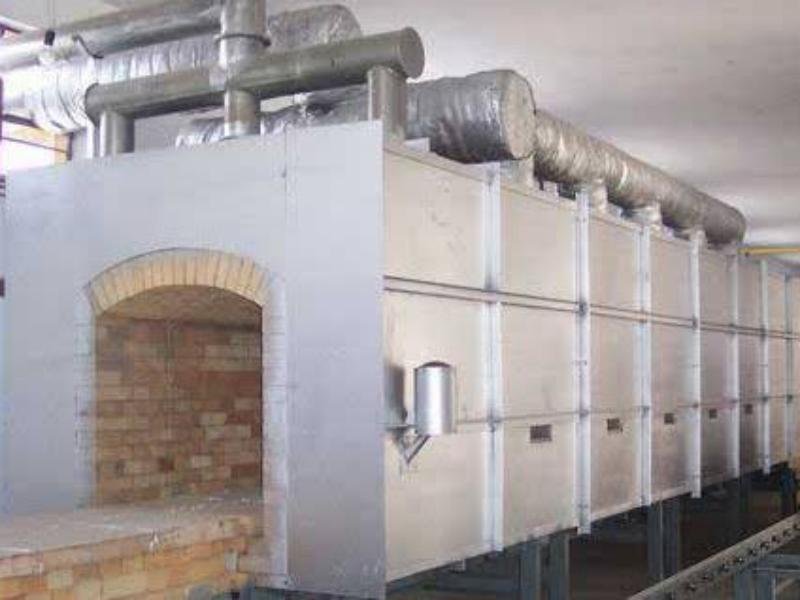
The preheating zone has a relatively low temperature, generally below 800℃. It primarily uses clay fire bricks and lightweight clay insulating bricks, combined with calcium silicate boards and ceramic fiber blankets. Clay bricks are moderately priced, have good thermal stability, and adapt to flue gas erosion and temperature gradient changes. Lightweight insulating materials are used in the kiln lining back layer to reduce heat storage and dissipation, improving thermal efficiency.
The firing zone is the core high-temperature area and a key focus for material selection. High-alumina bricks and mullite bricks are commonly used in typical 1200–1350℃ conditions. Mullite bricks have stronger resistance to thermal shock and glaze dust erosion and are mostly used in the kiln roof and near the burners. For acidic atmosphere kilns with higher firing temperatures, silica bricks are used due to their high load softening temperature and high-temperature volume stability, but poor thermal shock resistance. Corundum bricks and corundum-mullite bricks are used for some burners and areas with extremely high temperatures.
The cooling zone experiences a gradual temperature decrease and frequent temperature fluctuations. Clay bricks and mullite bricks with good thermal shock resistance are preferred, combined with lightweight insulating bricks to resist thermal shock from rapid cooling and reduce lining cracking and spalling.
Kiln cars are key load-bearing components of tunnel kilns. The platform commonly uses cordierite bricks, mullite bricks, and high-alumina bricks, requiring wear resistance and thermal shock resistance to prevent cracking from repeated kiln loading and unloading. The kiln car lining is also equipped with lightweight insulating materials to prevent heat loss downwards.
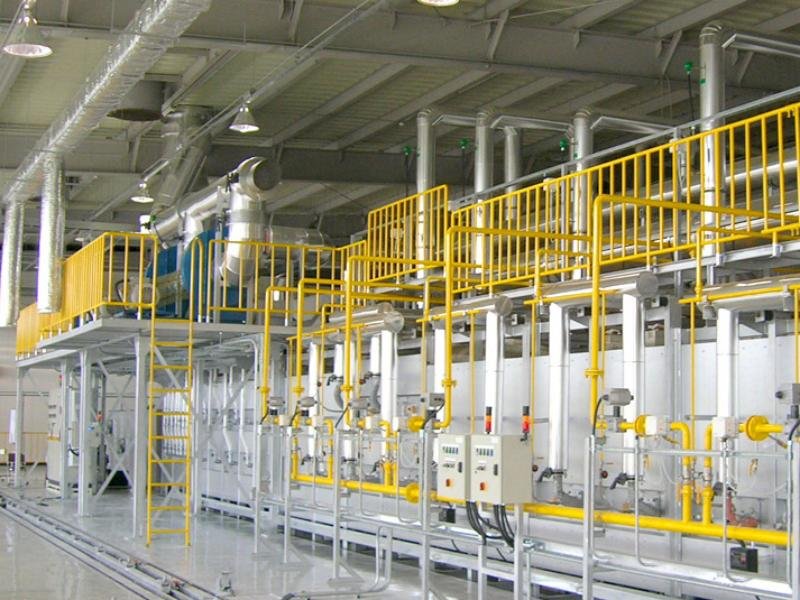
In addition to shaped bricks, tunnel kilns also extensively use refractory castables and ramming mixes for burners, arch corners, and irregularly shaped repair areas. These allow for flexible construction and are suitable for complex shapes. The entire lining adopts a composite structure of “heavy refractory bricks on the working face + lightweight insulation material on the backing”, which reduces energy consumption while ensuring the service life of the kiln lining.