Address
Building 1, Zone 1, Greenland Binhu International City, Zhengzhou, Henan, China
Work Hours
Monday to Friday: 9AM - 7PM
Weekend: 10AM - 6PM
Address
Building 1, Zone 1, Greenland Binhu International City, Zhengzhou, Henan, China
Work Hours
Monday to Friday: 9AM - 7PM
Weekend: 10AM - 6PM

The energy industry uses a wide variety of kilns, the specific type depending on the stage of fuel processing, power generation, or material preparation.
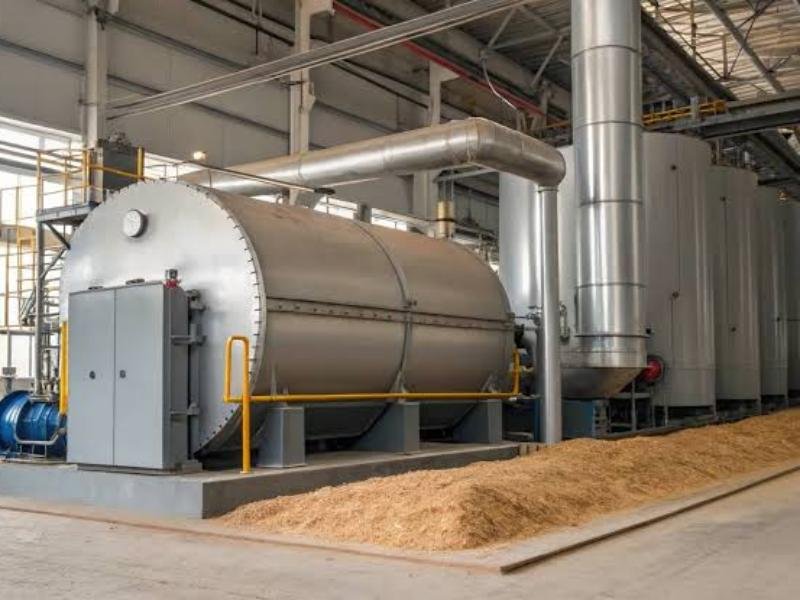
In the utilization of low-calorific-value fuels such as coal gangue and in the co-production of building materials, tunnel kilns are typical equipment. They utilize the heat generated by the spontaneous combustion of fuel within the brick blanks for sintering, reaching temperatures of 900 to 1200℃, and are often equipped with waste heat recovery systems for power generation or drying.
In power and heat production, traditional pulverized coal boilers are essentially large-scale combustion furnaces. Fluidized bed boilers, on the other hand, are suitable for the efficient and clean combustion of low-quality fuels.
In the preparation of energy-related materials (such as carbon products and catalytic materials), ring-type and car-bottom-type calcining furnaces are widely used for the high-temperature calcination of products such as electrodes and graphite crucibles.
Rotary kilns are widely used in the calcination and roasting processes of petroleum coke, quicklime, and various catalysts, ensuring uniform heating of materials through the rotating cylinder.
Furthermore, for special atmospheres or high purity requirements, electric kilns (such as electric tunnel kilns and medium-frequency induction furnaces) are used in the smelting of special ceramics or metals due to their precise temperature control and lack of combustion pollution.
Overall, the core of kiln selection in the energy industry lies in matching fuel characteristics with the process thermal regime, and emphasizing the cascade utilization of waste heat and carbon emission control.