Address
Building 1, Zone 1, Greenland Binhu International City, Zhengzhou, Henan, China
Work Hours
Monday to Friday: 9AM - 7PM
Weekend: 10AM - 6PM
Address
Building 1, Zone 1, Greenland Binhu International City, Zhengzhou, Henan, China
Work Hours
Monday to Friday: 9AM - 7PM
Weekend: 10AM - 6PM

Circulating fluidized bed boilers (CFB) typically operate at bed temperatures between 850 and 950℃. A large volume of material circulates at high speed within the furnace, repeatedly scouring the furnace walls, while simultaneously enduring temperature fluctuations and erosion from coal ash and flue gas. Therefore, the refractory lining must be wear-resistant, erosion-resistant, thermally shock-resistant, dimensionally stable, and possess a certain degree of erosion resistance. The overall structure employs a composite framework of a “wear-resistant working layer + thermal insulation layer,” primarily using monolithic refractories, supplemented by shaped bricks and insulation materials.
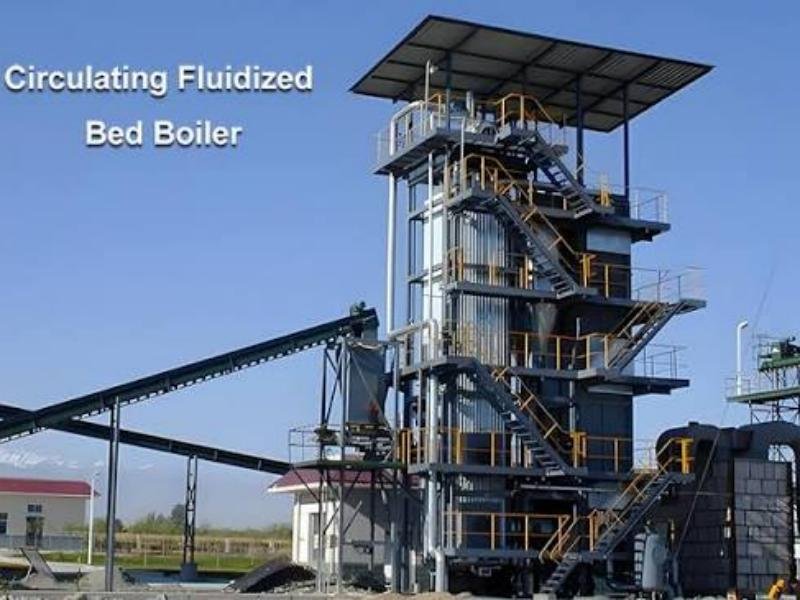
Wear-resistant refractory castables are the most widely used material for the working layer. Classified by aggregate system, they include corundum, silicon carbide (SiC) composite, and high-alumina-mullite, among others. They often utilize low-cement bonding, with steel fiber reinforcement in key areas, offering wear resistance, erosion resistance, and resistance to spalling, making them the preferred choice for high-erosion areas such as the furnace and separators.
Refractory plastics, particularly phosphate-bonded mullite-based ones, are commonly used. They are dimensionally stable, wear-resistant, and easy to repair, making them ideal for combustion chamber areas and repairing localized defects.
Shaped refractory bricks, including high-alumina bricks, clay refractory bricks, and corundum bricks, offer high refractoriness and resistance to acid and alkali corrosion. They are primarily used in less abrasive flues and tail-end heating surfaces.
Insulation materials, including lightweight insulating castables, calcium silicate insulation boards, and ceramic fiber blankets, are laid between the working layer and the furnace shell to provide insulation and reduce heat loss.
The dense phase zone of the furnace and the air distribution plate experience the most severe thermal erosion, with high bed temperatures and high bed material concentrations. Thick layers of corundum or silicon carbide composite wear-resistant castables are typically poured, with lightweight insulating castables or calcium silicate boards on the outer side.
High-temperature cyclone separators and return valves are subjected to high-speed erosion by dust-laden airflow, with the inlet section and lower part of the cone showing the most significant wear. Silicon carbide composite or corundum wear-resistant castables are commonly used, with localized repairs possible using mullite-based plastics.
External heat exchangers experience significant material disturbance and high temperatures, making high-alumina mullite or corundum castables preferable.
Flue ducts and cold ash hoppers experience less wear and can be constructed using high-alumina bricks, clay fire bricks, or ordinary high-alumina castables, insulated with insulating bricks or ceramic fiber blankets.
When selecting components, categorize and match them according to temperature, wear intensity, and corrosiveness of each part, and rationally combine wear-resistant and insulation layers, considering both furnace lining life and cost.