Address
Building 1, Zone 1, Greenland Binhu International City, Zhengzhou, Henan, China
Work Hours
Monday to Friday: 9AM - 7PM
Weekend: 10AM - 6PM
Address
Building 1, Zone 1, Greenland Binhu International City, Zhengzhou, Henan, China
Work Hours
Monday to Friday: 9AM - 7PM
Weekend: 10AM - 6PM

Aluminum bricks, generally referring to high-aluminum bricks, are neutral aluminosilicate refractory materials with an aluminum oxide (Al₂O₃) content of not less than 48%. They are made from high-alumina bauxite and other raw materials through molding and high-temperature calcination. Their core characteristics revolve around high-temperature resistance, corrosion resistance, and structural stability, making them suitable for high-temperature working conditions in various industries.
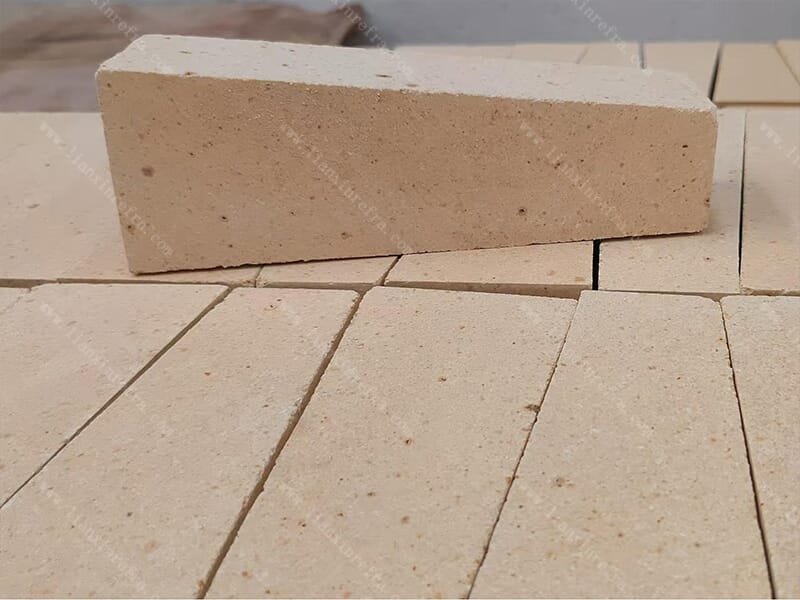
The most prominent feature is its excellent high-temperature resistance. Its refractoriness can reach 1750~1790℃, far exceeding that of clay bricks and semi-silica bricks, classifying it as a high-grade refractory material. It can withstand high-temperature environments of around 1600℃ for extended periods, and the higher the Al₂O₃ content, the stronger the high-temperature resistance. Aluminum brick also has a relatively high load softening temperature. Due to its low impurity content and low fusible glass content, it maintains structural stability under high-temperature loads, although slightly lower than silica bricks.
Aluminum bricks have good chemical stability, approaching that of neutral refractory materials, effectively resisting the erosion of acidic and alkaline slags. Due to its small SiO₂ content, its resistance to alkaline slag is slightly weaker, but it can resist the erosion of molten metal and high-temperature flue gas, making it suitable for complex industrial conditions.
Aluminum bricks also possess good structural strength and wear resistance, high compressive strength at room temperature, a dense brick body, and low apparent porosity, enabling it to resist material impact and airflow erosion, reducing losses. Furthermore, it has good thermal stability and better thermal conductivity than clay bricks, achieving uniform heat transfer. Some special aluminum bricks can also have their creep resistance and spalling resistance improved through process optimization.
Aluminum bricks are classified into three grades according to Al₂O₃ content to suit different applications. With widely available raw materials, mature manufacturing processes, and high cost-effectiveness, they are a core material for high-temperature equipment linings in industries such as metallurgy, building materials, and chemicals, balancing practicality and economy.