Address
Building 1, Zone 1, Greenland Binhu International City, Zhengzhou, Henan, China
Work Hours
Monday to Friday: 9AM - 7PM
Weekend: 10AM - 6PM
Address
Building 1, Zone 1, Greenland Binhu International City, Zhengzhou, Henan, China
Work Hours
Monday to Friday: 9AM - 7PM
Weekend: 10AM - 6PM

The price of refractory bricks is determined by a variety of factors, primarily the following:
Refractory bricks come in a wide variety of materials, including clay, high-alumina, siliceous, and corundum. Prices vary significantly for different materials. For example, the higher the alumina content in high alumina refractory bricks, the higher the price. For example, premium-grade high alumina bricks (Al₂O₃ content ≥80%) are more expensive than third-grade high-alumina bricks (Al₂O₃ content 48%-60%).
The price of standard-sized refractory bricks, such as the common 230*114*65mm standard bricks, is relatively fixed. However, custom-shaped bricks, due to the need for mold making and specialized production processes, are generally more expensive than standard bricks.

The quality and performance of refractory bricks, such as slag resistance, thermal shock resistance, and refractoriness under load, significantly influence their price. High-quality, high-performance refractory bricks require stricter raw material selection and production process control, resulting in higher prices.
The production process includes raw material processing, forming, drying, and firing. For example, refractory bricks produced using the isostatic pressing process have greater density and uniformity, and are therefore more expensive than bricks produced using conventional dry pressing. Refractory bricks sintered at high temperatures and for extended periods of time offer increased density and strength, but their cost and price also increase accordingly.
Refractory bricks from well-known brands offer greater assurance in raw material selection, production processes, and quality control. Their brand reputation also leads to higher prices. However, refractory bricks from smaller or unbranded brands may be cheaper, but their quality and after-sales service may not be guaranteed.
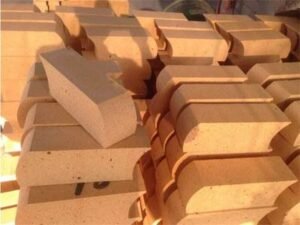
Regional differences in production costs, transportation fees, and other factors can lead to varying prices for refractory bricks. For example, clay bricks produced in Xinmi, Henan, may be more expensive than those in other regions due to their higher quality.