Address
Building 1, Zone 1, Greenland Binhu International City, Zhengzhou, Henan, China
Work Hours
Monday to Friday: 9AM - 7PM
Weekend: 10AM - 6PM
Address
Building 1, Zone 1, Greenland Binhu International City, Zhengzhou, Henan, China
Work Hours
Monday to Friday: 9AM - 7PM
Weekend: 10AM - 6PM

Zirconium bricks have a wide range of crucial applications in the chemical industry. With their extremely high corrosion resistance, excellent thermal stability, and good wear resistance, they have become a “trump card” material for solving harsh working conditions such as strong corrosion, high temperature, and high pressure. Their core applications can be summarized in the following four aspects:
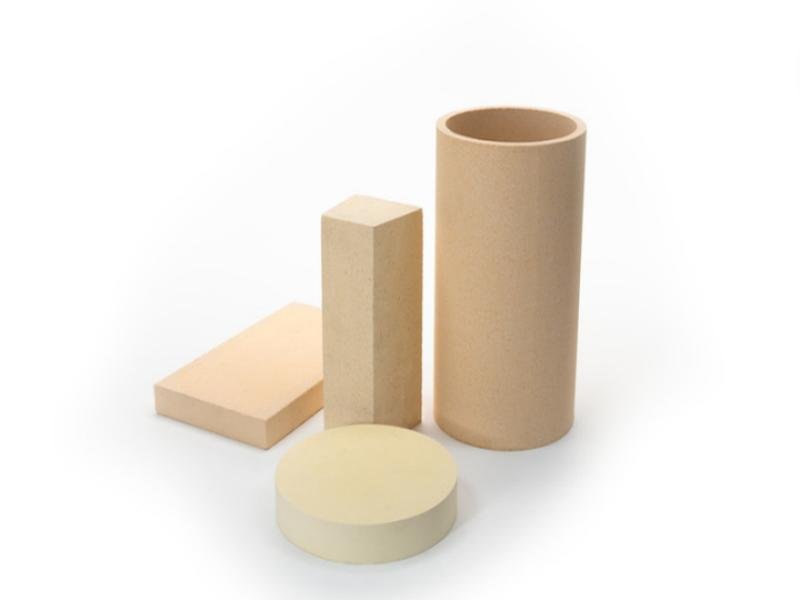
One of the most challenging problems in chemical production is handling boiling hydrochloric acid, sulfuric acid, nitric acid, and strong alkali molten materials. Most metals and ordinary ceramics will rapidly corrode and fail in such environments, while zirconium bricks (especially stabilized zirconium oxide bricks) have extremely strong inertness to almost all acids and alkalis (except hydrofluoric acid). Therefore, they are widely used as lining materials for high-pressure reactors, acidolysis tanks, storage tanks, and towers. By lining the inner walls of carbon steel or titanium equipment with zirconium bricks, corrosive media are isolated, and the strength of the metal is utilized, significantly extending the service life of the equipment and ensuring the safe operation of processes such as chlor-alkali, pesticide, and organic synthesis.
In high-temperature processes such as sulfuric acid roasting, titanium dioxide calcination, and catalyst regeneration, furnace temperatures often exceed 1200℃, accompanied by corrosive gases and molten slag. Zircon bricks possess extremely high refractoriness (melting point approximately 2700℃) and thermal shock resistance, capable of withstanding severe temperature fluctuations without cracking. They are commonly used as refractory linings for the firing zone of rotary kilns, the top and side walls of fluidized bed roasting furnaces, effectively resisting chemical erosion from high-temperature acidic gases and material scouring, preventing premature furnace damage.
During the transportation of chemical slurries (such as phosphate slurry and mineral slurry), the high-speed scouring of solid particles combined with liquid corrosion causes significant damage to pipelines and valves. The high hardness and low coefficient of friction of zircon bricks make them ideal wear-resistant ceramic linings. Used by bonding or casting in elbows, tees, and slurry pump flow components, they significantly reduce wear and leakage, lowering maintenance frequency.
In fields such as pharmaceutical intermediates and electronic chemicals, where metal ion contamination is extremely sensitive, zirconium bricks, due to their chemical inertness, do not precipitate impurities that contaminate materials. Therefore, they are used to manufacture high-purity reaction crucibles or substrates, ensuring the purity of advanced chemicals.
In summary, zirconium bricks in the chemical industry are not only a “corrosion shield” but also a “heat-resistant backbone” and “wear-resistant armor.” By addressing the two major industry pain points of corrosion and wear, they provide irreplaceable hardware support for core processes such as strong acid production, high-temperature calcination, and high-purity synthesis, serving as a key material guarantee for the development of modern chemical engineering towards high temperature, high pressure, and large-scale processes.