Address
Building 1, Zone 1, Greenland Binhu International City, Zhengzhou, Henan, China
Work Hours
Monday to Friday: 9AM - 7PM
Weekend: 10AM - 6PM
Address
Building 1, Zone 1, Greenland Binhu International City, Zhengzhou, Henan, China
Work Hours
Monday to Friday: 9AM - 7PM
Weekend: 10AM - 6PM

Alumina hollow sphere bricks are a lightweight refractory material made primarily from alumina hollow spheres and alumina powder, fired at temperatures above 1750℃. In modern high-temperature kilns, they play a dual role as a core working lining and a highly efficient energy-saving barrier. Their unique value is mainly reflected in the following three aspects:
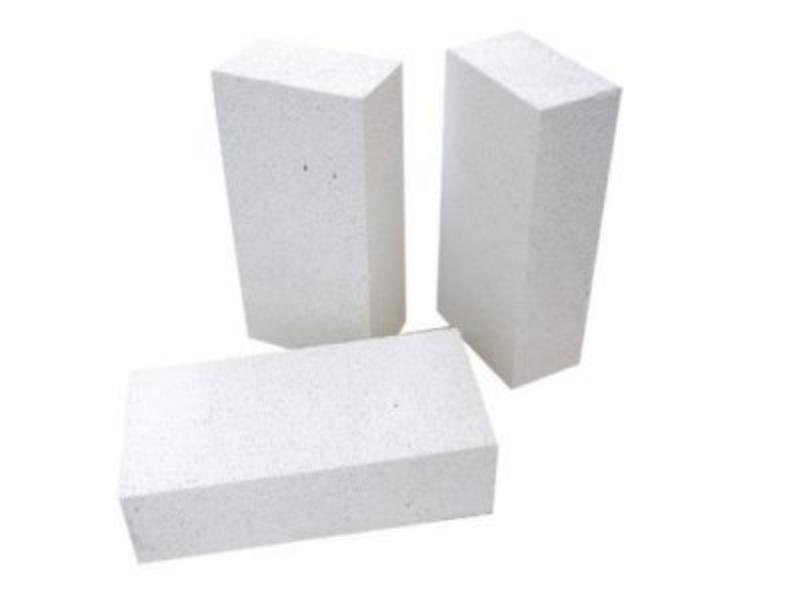
This is the most crucial use of alumina hollow sphere bricks. They can be directly laid on the working layer in contact with the flame, withstanding extreme high temperatures. Their maximum service temperature can reach 1800℃, and at this temperature, the structure remains stable with minimal reheat linear change, ensuring long-term precise operation of the kiln.
Alumina hollow sphere bricks are widely used in gasifiers and carbon black reactors in the petrochemical industry, induction furnaces, molybdenum wire furnaces, and tungsten rod furnaces in the metallurgical industry, and high-temperature shuttle kilns and down-draft kilns in the ceramics and refractory materials industries.
Compared to traditional heavy refractory bricks, it achieves a balance in a key indicator: reduced weight without sacrificing strength.
Significant Weight Reduction: Its bulk density (1.1~1.5 g/cm³) is only half that of corundum products, resulting in a weight reduction of 1.1 to 1.9 tons per cubic meter, significantly reducing the load on the kiln’s steel structure.
Guaranteed Strength: Despite its lightweight nature, its mechanical strength is several times that of ordinary lightweight refractory products, sufficient to withstand thermal stress erosion at high temperatures.
Thanks to its internal closed hollow spherical structure, this material possesses extremely low thermal conductivity and excellent thermal insulation performance, key to achieving energy conservation in high-temperature industrial applications.
Significant Energy Saving: Effectively reduces heat loss from the furnace wall, improving thermal efficiency, with overall energy savings exceeding 30%.
Material Saving: Due to its inherent thermal insulation function, it can reduce or even eliminate the need for multiple layers of insulation material at the rear of the furnace, further optimizing the kiln structure.