Address
Building 1, Zone 1, Greenland Binhu International City, Zhengzhou, Henan, China
Work Hours
Monday to Friday: 9AM - 7PM
Weekend: 10AM - 6PM
Address
Building 1, Zone 1, Greenland Binhu International City, Zhengzhou, Henan, China
Work Hours
Monday to Friday: 9AM - 7PM
Weekend: 10AM - 6PM

A UAE customer recently consulted us about converter repair. The customer sought our advice on the appropriate refractory materials for converter repair. The Ruitai Lianxin team provided professional solutions and suggestions.
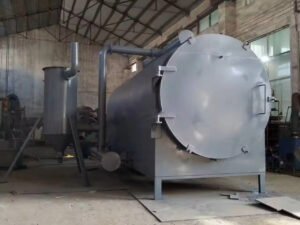
Converter repair requires selecting suitable refractory materials based on the damage mechanism of different parts, with magnesia as the core, while also considering erosion resistance, thermal shock resistance, and ease of application.
Magnesium-carbon thermal repair refractory is the most widely used large-area repair material. It uses magnesia and bitumen/resin as main raw materials and is suitable for repairing the charging side, furnace bottom, and tapping side. It utilizes the residual heat of the furnace to self-compact and bond tightly to the original lining, offering convenient application and a service life of 10-20 heats. Magnesia-silica aqueous environmentally friendly thermal repair refractory is an environmentally friendly alternative, using magnesia and silica fume as raw materials. It has high density and the longest service life, reaching 30-40 heats, but its application is limited by the application method.
Magnesia-based or magnesia-carbonaceous spray refractory is used for areas difficult to repair by self-flow, such as trunnions and furnace body rounded corners. Made from recalcined magnesia, it is sprayed using specialized equipment and hardens rapidly at high temperatures, effectively solving the problem of carbon oxidation damage in the trunnion area. Each application requires 0.4-0.8 tons, with a service life of 4-5 heats.
Magnesia-based grout is used for filling and repairing gaps during taphole replacement. Made from high-grade fused magnesia, it possesses high erosion and corrosion resistance, filling gaps in the taphole seat bricks and ensuring a stable seal in the taphole channel. Furthermore, magnesia-based hand-applied refractory is commonly used in the furnace hood area, spreading and solidifying with the help of furnace shaking. This adapts to the thermal shock and airflow erosion conditions of the furnace hood, repairing damaged areas of the furnace lining and extending furnace life.
Finally, the customer affirmed our solution, discussed the purchase of refractory materials with us, and both parties reached a satisfactory cooperation agreement.