Address
Building 1, Zone 1, Greenland Binhu International City, Zhengzhou, Henan, China
Work Hours
Monday to Friday: 9AM - 7PM
Weekend: 10AM - 6PM
Address
Building 1, Zone 1, Greenland Binhu International City, Zhengzhou, Henan, China
Work Hours
Monday to Friday: 9AM - 7PM
Weekend: 10AM - 6PM

Industrial kilns often suffer from spalling and wear of refractory brick linings under high-temperature operation, which directly affects the operational safety and production efficiency of the equipment. To solve this problem, it is necessary to analyze its causes in depth and take effective countermeasures to ensure the continuity of production.
The failure of refractory bricks is often not caused by a single factor, but is the result of a combination of physical and chemical processes.
First, frequent temperature fluctuations can lead to thermal stress, which in turn can cause structural spalling.
Secondly, mechanical erosion and friction of materials are the main causes of wear.
If the atmosphere inside the kiln is complex, chemical erosion will also exacerbate the loss of materials.
Therefore, only by accurately determining the damage mechanism can we prescribe the right remedy, avoid blind repairs, and develop a scientific repair plan.
The choice of materials is crucial when repairing damaged areas. At this point, we should not only pay attention to the price of refractory bricks, but also to the physical properties of the materials.
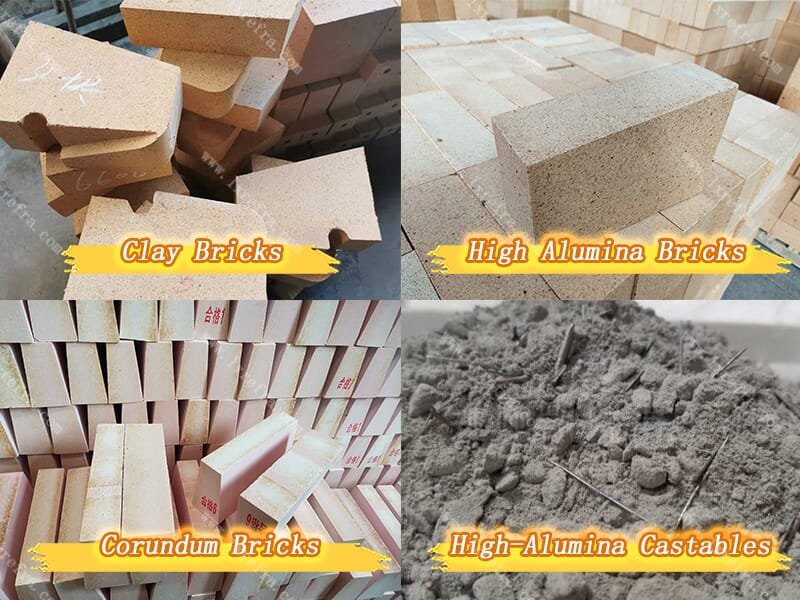
For example, in areas with strong acid erosion, high-alumina bricks or clay fire bricks should be used preferentially. These bricks have good acid resistance.
In alkaline environments such as the firing zone of a cement rotary kiln, magnesia-chrome bricks or magnesia-alumina spinel bricks are better choices.
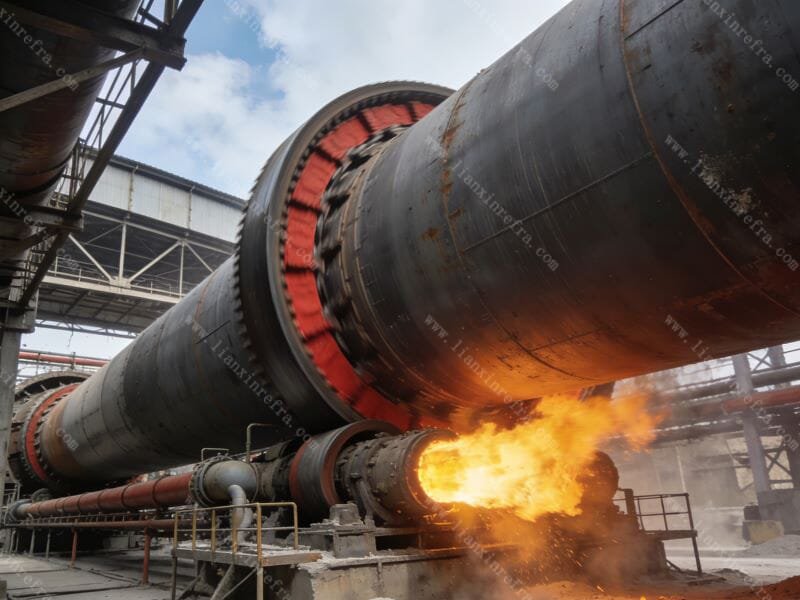
As a professional refractory brick manufacturer, we recommend selecting materials that match the specific application environment. This not only ensures stable operation but also reduces overall costs. Ultimately, it avoids frequent downtime due to substandard material quality.
In addition to high-quality materials, scientific construction management is also indispensable.
Even if high-performance materials are chosen, problems such as improper masonry or inadequate expansion joint placement during construction can still lead to early damage.
Therefore, during the repair process, construction standards must be strictly controlled to ensure the integrity of the lining structure.
At the same time, we will strengthen daily inspections and maintenance. If you notice even the slightest signs of wear or peeling, address them immediately to prevent a small problem from escalating into a major incident.
Preventive maintenance can effectively reduce the number of downtime for repairs and ensure the smooth operation of the production line.
Based on this, it is then necessary to find a reliable refractory brick supplier. Establishing a long-term cooperative relationship with a high-quality supplier will provide a solid guarantee for the company’s efficient production.