Address
Building 1, Zone 1, Greenland Binhu International City, Zhengzhou, Henan, China
Work Hours
Monday to Friday: 9AM - 7PM
Weekend: 10AM - 6PM
Address
Building 1, Zone 1, Greenland Binhu International City, Zhengzhou, Henan, China
Work Hours
Monday to Friday: 9AM - 7PM
Weekend: 10AM - 6PM

Ceramic tunnel kilns are continuous firing equipment, with internal temperatures maintained at over 1200℃ for extended periods. High-alumina refractory bricks are a key material for kiln linings, directly affecting kiln lifespan and energy consumption levels. Therefore, understanding its performance characteristics and selection criteria is particularly important for manufacturing companies.
Ceramic tunnel kilns typically operate 24 hours a day without interruption, and a single kiln shutdown often results in significant losses. Therefore, it has extremely high requirements for the stability of the lining material.
First, the kiln not only endures high temperatures of 1300℃ to 1400℃ for a long time, but also experiences periodic temperature fluctuations.
Meanwhile, the ash produced by fuel combustion and the volatiles of ceramic glaze will cause chemical erosion. This is especially noticeable at the junction of the firing zone and the cooling zone.
In addition, the kiln furniture loaded with ceramic products moves back and forth on the track, causing continuous mechanical friction and collisions to the kiln walls and the kiln bottom.
These combined working conditions subject refractory bricks to multiple tests of thermal stress, chemical erosion, and mechanical wear over a long period of time, which ordinary clay bricks often cannot withstand.
High-alumina refractory bricks typically have an alumina content between 48% and 80%, and they mainly possess the following characteristics.
(1) Excellent fire resistance.
(2) The load softening temperature is high, reaching over 1450℃.

(3) The structure has stable strength at high temperatures. It can withstand the long-term load of ceramic products and kiln furniture.
(4) Good thermal shock resistance. Therefore, it can adapt to the frequent temperature cycles of tunnel kilns.
Due to their low impurity content, high-alumina refractory bricks are not easily damaged in reducing atmospheres and have a relatively long service life. Using high-quality refractory bricks can not only reduce the frequency of maintenance, but also improve the thermal efficiency of the kiln and indirectly reduce fuel consumption.
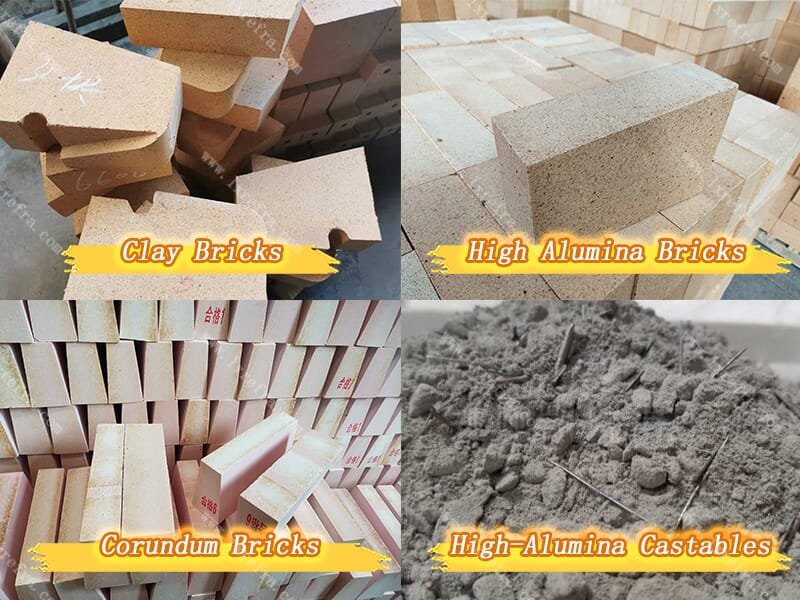
Ceramic enterprises should configure kilns reasonably according to different temperature zones. High-alumina content products should be selected for high-temperature zones, while clay bricks or low-alumina bricks can be used for medium- and low-temperature zones.
This tiered configuration scheme can both ensure the overall performance of the kiln and optimize the procurement budget.
Meanwhile, the technical parameters and test reports provided by refractory brick manufacturers should be used as the basis for evaluation to avoid selecting the wrong materials due to information asymmetry. High-quality suppliers typically have automated production lines and strict quality control systems, enabling them to supply high-quality refractory bricks in bulk.

Henan Ruitai Lianxin Refractory Materials Co., Ltd. has 20 years of experience in refractory material production. It can not only provide customers with high-quality refractory bricks that meet the required standards, but also provide the most suitable kiln operating conditions solutions.
Please feel free to contact us if you have any needs. Choosing Ruitai Lianxin is choosing strength.