Address
Building 1, Zone 1, Greenland Binhu International City, Zhengzhou, Henan, China
Work Hours
Monday to Friday: 9AM - 7PM
Weekend: 10AM - 6PM
Address
Building 1, Zone 1, Greenland Binhu International City, Zhengzhou, Henan, China
Work Hours
Monday to Friday: 9AM - 7PM
Weekend: 10AM - 6PM

Rotary kilns are core thermal equipment in industries such as cement, metallurgy, and chemicals. Their interiors are subjected to complex conditions of high temperatures, chemical corrosion, mechanical wear, and thermal shock. Refractory materials, acting as the kiln’s “protective armor,” directly determine equipment operating rates, production costs, and production safety. Selecting suitable refractory materials requires a systematic consideration of the differences in operating conditions across different areas of the kiln, combined with material properties, production processes, and economic efficiency.
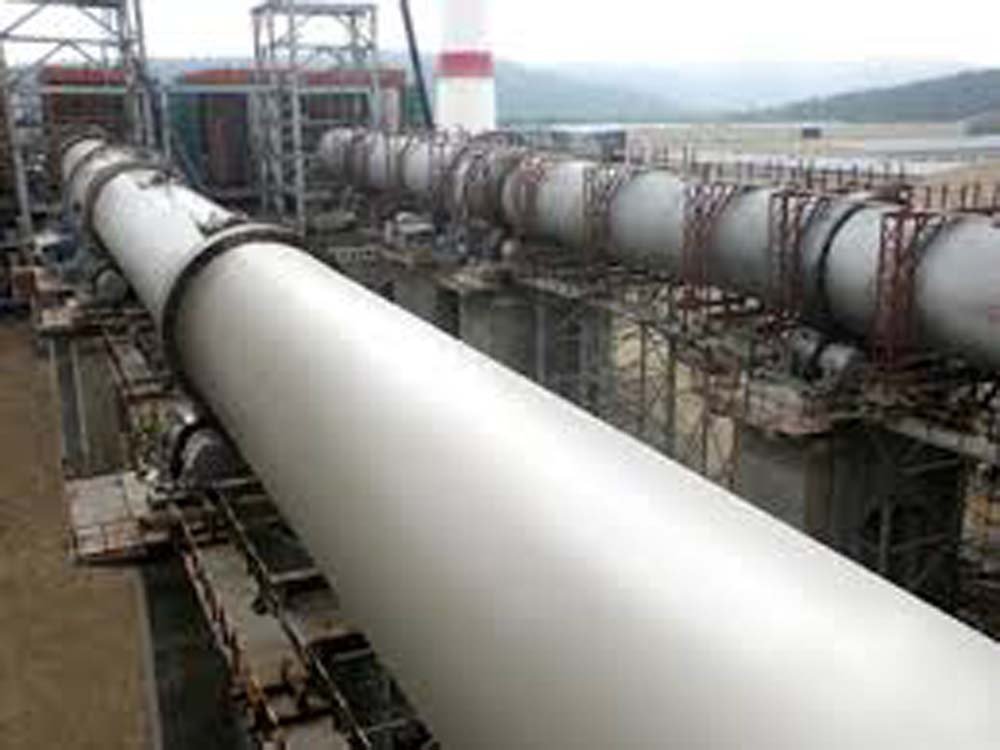
The core principles of selection are “suitability for operating conditions, performance matching, and economic rationality.” A rotary kiln can be divided along its axial direction into different thermal zones. Such as the decomposition zone, transition zone, firing zone, and kiln mouth. Each zone exhibits significant differences in temperature, material state, and corrosion mechanisms, necessitating targeted material selection to avoid a “one-size-fits-all” approach. Simultaneously, it is crucial to balance the material’s core properties. Such as high-temperature resistance, corrosion resistance, and thermal shock resistance with procurement and construction costs, prioritizing materials with high cost-effectiveness and long service life to reduce kiln downtime for maintenance and lower overall costs.
Precise material selection for specific kiln zones is crucial and forms the foundation for extending the service life of refractory materials.
The firing zone, being the area with the highest temperature and most severe conditions within the kiln, experiences flame center temperatures reaching 1800-2000°C. The material is in a molten state and subjected to intense chemical erosion and mechanical impact. Materials with high temperature resistance, strong slag resistance, and easy kiln lining adhesion must be selected. Commonly used materials include directly bonded magnesia-chrome bricks and magnesia-iron spinel bricks, which are alkaline materials. Special magnesia bricks can be used at the normalizing point, while silica-molybdenum bricks with excellent kiln lining adhesion can be explored at the end, forming a secondary protection with the kiln lining and extending service life.
The transition zone has complex conditions and frequent temperature fluctuations (flue gas temperature approximately 1700°C). The kiln lining adheres and falls intermittently, requiring the refractory material to withstand severe thermal shock while resisting erosion from volatile components such as alkalis and sulfur. Materials with excellent thermal shock stability are preferred here. Modified silica-mullite bricks and silica-mullite red bricks, for example, exhibit significantly improved thermal shock resistance after the addition of andalusite, and their non-kiln-skin-forming property prevents subsequent ring formation. Magnesia-alumina spinel bricks and chrome-magnesia bricks can also be used, offering both erosion resistance and thermal shock resistance.
The kiln opening (discharge port) is the weakest point in the kiln body, bearing the scouring of high-temperature clinker and the thermal shock of rapid heating and cooling. If the kiln opening is regular, silicon carbide bricks, silica-mullite bricks, or directly bonded magnesia-chrome bricks can be used. At lower temperatures, high-alumina bricks and phosphate-bonded high-alumina bricks can be considered alternatives. If the kiln opening is deformed, corundum-based or steel fiber-reinforced corundum castables can be used for on-site casting, offering greater adaptability.
The decomposition zone has a relatively mild temperature (flue gas temperature below 1300°C), with the main threat being the condensation and corrosion of alkali-sulfur compounds. Alkali-resistant bricks or ordinary high-alumina bricks can be used, balancing economy and erosion resistance.
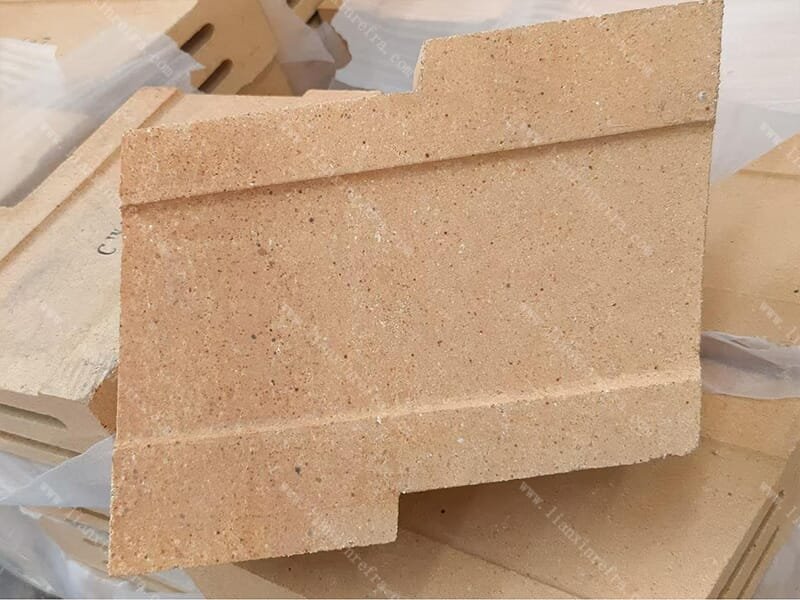
Core material performance considerations are indispensable, requiring focus on four key indicators.
First, high-temperature resistance. Focusing on refractoriness and load softening temperature, ensure the material does not soften or melt at the highest temperature in its corresponding zone. The load softening temperature of the material in the firing zone must be no less than 1600°C.
Second, thermal shock resistance, i.e., the ability to resist rapid heating and cooling without cracking or peeling. Materials in the transition zone and kiln mouth must withstand multiple cycles of air or water cooling at 1100°C without damage.
Third, resistance to chemical erosion, targeting alkaline melts and alkaline sulfur vapors within the kiln. Magnesia and spinel materials are selected for alkaline zones, while high-alumina materials are selected for acidic zones.
Fourth, mechanical strength and wear resistance, to cope with the stress generated by material erosion and kiln rotation, prioritizing materials with high density and strong wear resistance, such as silicon carbide bricks and high-wear-resistant high-alumina bricks.
Quality control and economic balance are important supplements to the selection process. During procurement, the raw material quality, molding equipment, and calcination process of the refractory brick supplier must be examined. Obtain a quality guarantee certificate and conduct sample re-inspection to avoid frequent failures caused by the use of cheap and inferior materials. Strict quality control is required during construction, ensuring reasonable brick joints and expansion joints, and preventing damaged or damp bricks from entering the kiln. Simultaneously, based on production scale and budget, high-end materials should be selected for critical areas, while cost-effective materials should be used for secondary areas to avoid excessive investment. If changing suppliers, small-batch trials should be conducted to reduce risk.
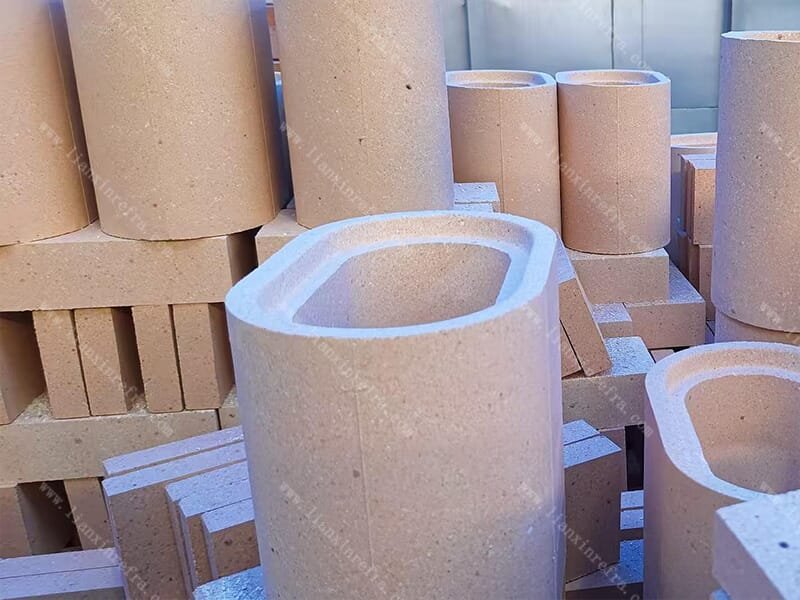
In addition, environmental requirements must be considered, prioritizing low-chromium or chromium-free materials to reduce chromium pollution. Material selection should be adjusted based on kiln type, speed, and raw material/fuel characteristics. For example, large precalciner kilns require high-performance, high-end materials.
In summary, the selection of refractory materials for rotary kilns must be based on regional operating conditions, matching core performance, and balancing quality, environmental protection, and economy to achieve precise matching between materials and equipment. Thereby extending the kiln’s service life and ensuring stable and efficient production operation.