Address
Building 1, Zone 1, Greenland Binhu International City, Zhengzhou, Henan, China
Work Hours
Monday to Friday: 9AM - 7PM
Weekend: 10AM - 6PM
Address
Building 1, Zone 1, Greenland Binhu International City, Zhengzhou, Henan, China
Work Hours
Monday to Friday: 9AM - 7PM
Weekend: 10AM - 6PM

As a core piece of equipment in steelmaking, the converter operates in an extremely harsh environment, enduring high temperatures of 1600-1800℃, erosion by alkaline slag, mechanical impact from molten steel and scrap steel, and frequent sudden temperature changes. The selection of refractory materials directly determines the furnace lifespan, production costs, and production safety. Reasonable material selection must be based on the different operating conditions of various parts of the converter, following the core principles of “condition matching, performance adaptation, cost control, and environmental compliance.” It requires comprehensive consideration of material performance, process requirements, and ease of operation and maintenance. The following details the selection method for converter refractory materials from four aspects: core principles, key points for material selection in each part, key influencing factors, and practical precautions.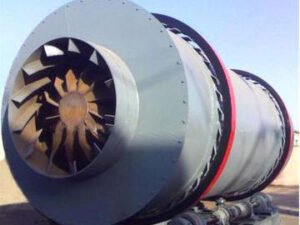
The core principle for selecting converter refractory materials is “zonal adaptation, performance priority, and comprehensive balance.” First, condition matching is a prerequisite. Different parts of the converter have different damage mechanisms, requiring targeted material selection to avoid premature local damage or cost waste due to a “one-size-fits-all” approach. Secondly, meeting performance standards is crucial. Emphasis should be placed on the material’s refractoriness, slag resistance, thermal shock resistance, high-temperature strength, and oxidation resistance to ensure stable operation under extreme conditions. Thirdly, cost control is key. A balance must be struck between material unit price, service life, and maintenance costs, aiming for the optimal cost per ton of steel. Finally, environmental compliance is a trend. Priority should be given to using chromium-free and other environmentally friendly materials to replace traditional high-pollution magnesia-chrome bricks, aligning with green metallurgy requirements.
Considering the different operating conditions of various parts of the converter, zonal material selection is key to extending furnace life.
The furnace bottom, as the core area directly in contact with molten steel, is subjected to long-term high-temperature molten steel penetration and slag erosion. Therefore, materials with strong alkali resistance, high density, and high strength are required, with magnesia-carbon bricks or magnesia ramming mixes being the preferred choices. Magnesia-carbon bricks combine excellent slag resistance and high-temperature strength, making them suitable for the core area of the furnace bottom. High-alumina bricks can be used in conjunction with the furnace bottom base layer to enhance load-bearing capacity and prevent high-temperature softening and deformation.
The slag line area is the most severely damaged part of the converter, constantly exposed to high-temperature alkaline molten slag. Therefore, it requires extreme erosion resistance. High-performance magnesia-carbon bricks with an MgO content ≥76% and apparent porosity ≤3% are selected, effectively resisting slag dissolution and penetration, and slowing down the rate of damage.
The furnace body is subjected to temperature gradient changes, molten steel splashing, and airflow erosion. It needs to balance thermal shock resistance and erosion resistance. Magnesia-carbon bricks or alumina-magnesia-carbon bricks can be used. These materials have strong chemical stability and can effectively cope with brick spalling caused by sudden temperature changes.
The furnace mouth and furnace cap are directly subjected to high-speed erosion from high-temperature furnace gases, molten slag splashing, and frequent rapid heating and cooling, and also need to resist mechanical impact. Magnesia-alumina spinel bricks are preferred. They balance thermal shock resistance and erosion resistance, and are environmentally friendly and chromium-free, making them more suitable for modern steelmaking needs than traditional magnesia-chrome bricks. High-performance magnesia-carbon bricks can also be used to improve wear resistance.
Due to its unique structure, the trunnion area is difficult to cover with slag during blowing, making the lining bricks prone to oxidation. Therefore, magnesia-carbon bricks with a carbon content of approximately 18% are required to enhance oxidation resistance and prevent carbon oxidation from causing the bricks to become porous.
The converter taphole is subject to rapid erosion from molten steel and sudden temperature changes, resulting in rapid damage. Materials with high temperature resistance and strong erosion resistance are necessary, often using fused magnesia bricks or sleeve bricks made from fused magnesia. High-purity magnesia ramming mixes can also be used to ensure smooth tapping and reduce the risk of leakage.
For repairs in the later stages of furnace life, magnesia-based spray mixes or magnesia-alumina ramming mixes with strong fluidity, binding strength, and high thermal stability are required to promptly repair damaged areas and extend the overall furnace life.
When selecting refractory materials, key influencing factors must be carefully considered. One is the slag composition. Converter slag is predominantly alkaline, requiring the use of alkaline refractory materials to avoid rapid erosion caused by acidic materials. Simultaneously, the material ratio should be adjusted according to the slag basicity, MgO, and FeO content. For example, when the slag FeO content is high, high-purity magnesia materials with stronger erosion resistance should be selected. Secondly, the smelting process is crucial. Different processes, such as top-blown and top-bottom combined blowing, have different erosion intensities. Combined blowing converters require materials with superior erosion resistance, and high-purity materials are necessary when smelting special steels to avoid impurities contaminating the molten steel. Thirdly, the physicochemical properties of the materials must be strictly controlled, including purity, bulk density, and apparent porosity. For example, the total impurities in magnesia materials should be controlled below 3%, and higher density results in stronger impermeability.
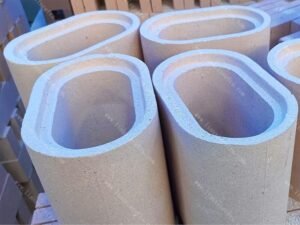
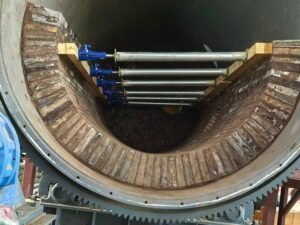
In practical operation, the compatibility of materials with construction and maintenance must also be considered. Different types of refractory materials must be paired with corresponding refractory mortar. Mixing acidic and alkaline refractory mortars is strictly prohibited to ensure the integrity of the masonry. During construction, the masonry gaps must be strictly controlled, leaving space for thermal expansion to reduce damage caused by temperature stress. Simultaneously, material lifespan must be selected in conjunction with production plans. Large converters can utilize high-performance, long-life materials to reduce maintenance frequency, while small converters can balance cost and lifespan by selecting cost-effective materials. Furthermore, storage conditions must be carefully considered to prevent siliceous and magnesian materials from becoming damp and pulverizing, affecting their performance.
In summary, the selection of converter refractory materials is a systematic project. It requires considering the differences in operating conditions across various parts, focusing on performance compatibility, and taking into account cost, environmental protection, and operational needs. Through zoned material selection, strict control of physicochemical indicators, and adaptation to smelting processes, an optimal balance between refractory material lifespan and production costs can be achieved. Rational selection of refractory materials can not only extend converter life and reduce refractory material costs per ton of steel, but also ensure continuous and stable steelmaking production, improve production efficiency, and provide support for the high-quality development of steel enterprises.
As one of top fire brick suppliers in China,Henan Ruitai Lianxin Refractory Materials Co., Ltd is a modern R&D-centered refractory manufacturer manufacturing enterprise integrated with refractories sales and marketing, furnace engineering construction, recycling and sales of waste refractories as well as refractory raw material, technology and goods import and export, and technical services. If you have any needs for refractory materials and purchase refractory bricks, please contact us and we will provide you with the best service.