Address
Building 1, Zone 1, Greenland Binhu International City, Zhengzhou, Henan, China
Work Hours
Monday to Friday: 9AM - 7PM
Weekend: 10AM - 6PM
Address
Building 1, Zone 1, Greenland Binhu International City, Zhengzhou, Henan, China
Work Hours
Monday to Friday: 9AM - 7PM
Weekend: 10AM - 6PM

Silica bricks, as a core acidic refractory material, are widely used in high-temperature industrial kilns such as coke ovens, glass melting furnaces, and open-hearth steelmaking furnaces due to their excellent high-temperature stability and resistance to acidic slag erosion. Their quality directly determines the kiln’s service life, production efficiency, and operating costs. Faced with a market flooded with silica brick products of varying quality, accurately selecting high-quality bricks requires comprehensive consideration of appearance, core performance indicators, raw material processing, manufacturer qualifications, and suitability for different operating conditions to avoid common purchasing mistakes.
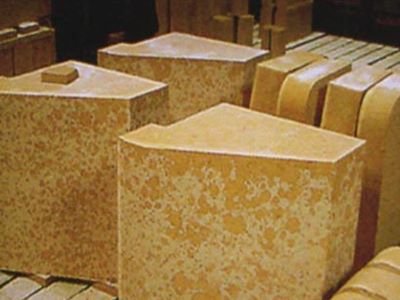
First, examine the appearance and dimensions to visually assess basic quality. High-quality silica bricks have a regular appearance, with straight, undamaged, and undistorted edges. The surface color is uniform, without obvious color differences, black spots, or cracks. The cross-sectional structure is dense, without delamination or large air pores. Random sampling can be conducted during purchase, measuring dimensional deviations with a ruler. High-quality products should have dimensional errors controlled within industry standards to avoid problems such as excessively large mortar joints, alkaline vapor erosion, and brick detachment due to non-compliant dimensions. At the same time, avoid products with rough surfaces, powdering, or damaged edges. These types of silica bricks often have substandard molding processes, loose internal structures, and extremely poor high-temperature load-bearing capacity.
Next, check the core physicochemical indicators, which are the core basis for judging the quality of silica bricks. High-quality silica bricks must first meet the following requirements: silica content ≥96%, and impurity content strictly controlled. The less alkaline impurities such as alumina, potassium oxide, and sodium oxide, the higher the refractoriness and high-temperature strength. Generally, high-quality silica bricks should have a melt flow index (Al₂O₃+2R₂O) below 0.5%, iron oxide content ≤0.5%, and calcium oxide ≤2.0%. True specific gravity is a key indicator; ordinary silica bricks should have a true specific gravity ≤2.38, and high-quality silica bricks should have a true specific gravity ≤2.35. The lower the true specific gravity, the less residual quartz in the brick body, the more complete the conversion between tridymite and cristobalite, the stronger the high-temperature volume stability, and the lower the risk of expansion and cracking during use. Furthermore, the load softening temperature needs to reach 1640-1670℃, the room temperature compressive strength must meet standards. And the apparent porosity must be moderate, balancing density and permeability to ensure durability under high-temperature conditions.
Furthermore, attention should be paid to raw materials and production processes to control the product’s intrinsic quality. High-quality silica bricks mostly use high-purity crystalline silica as raw material, rejecting cemented silica with many impurities and a loose structure. The higher the purity of the raw material’s silica, the better the product’s refractory performance. The production process requires strict control throughout, including precise batching, high-pressure molding, slow drying, and high-temperature firing in a reducing atmosphere. In particular, the firing temperature and holding time directly affect the degree of quartz crystal transformation. Reputable manufacturers use automated production lines, controlling process parameters throughout to avoid performance inconsistencies and quality fluctuations caused by manual production. High-quality silica bricks also have no pungent odor, no loose particles, and produce a crisp sound when tapped. Bricks that produce a dull sound often have internal cracks and should be avoided.
Verify the manufacturer’s qualifications and quality inspection reports to avoid inferior products. Prioritize reputable manufacturers with production qualifications and quality management system certification. These manufacturers have comprehensive quality control systems, and their products meet national refractory material industry standards. Always request product testing reports when purchasing, verifying that all physical and chemical indicators meet standards. Reject products without quality inspection reports or brand markings. Further investigate the manufacturer’s production scale and past cooperation cases. Manufacturers with good reputations and stable supply are more likely to provide product quality assurance. They should also provide comprehensive after-sales service and technical guidance to meet different kiln construction needs.
As one of top fire brick suppliers in China. Henan Ruitai Lianxin Refractory Materials Co., Ltd is a modern R&D-centered refractory manufacturer manufacturing enterprise integrated with refractories sales and marketing, furnace engineering construction, recycling and sales of waste refractories as well as refractory raw material, technology and goods import and export, and technical services. If you have any needs for refractory materials and purchase refractory bricks, please contact us and we will provide you with the best service.
Finally, precise selection based on working conditions is crucial to avoid blind purchasing. Silica bricks have poor thermal shock stability and are not resistant to rapid temperature changes below 800℃, making them unsuitable for kiln areas with frequent hot and cold cycles. Selection should consider the kiln’s operating temperature, corrosive media, and load-bearing requirements. For high-temperature load-bearing areas such as glass melting furnace arches and coke oven carbonization chambers, high-purity, high-density silica bricks should be prioritized. For ordinary high-temperature applications, standard high-quality silica bricks can be selected. Simultaneously, the brick type and specifications should be determined based on the masonry requirements. Custom-shaped bricks can be made if necessary to improve the sealing of the masonry.
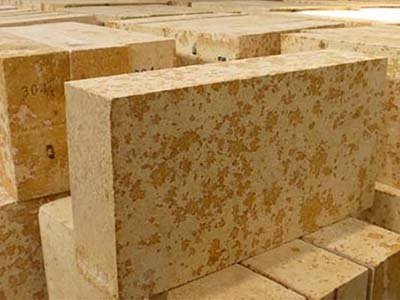
In summary, selecting high-quality silica bricks requires not only initial screening based on appearance. But also adherence to three core criteria: physicochemical properties, raw material processing, and manufacturer qualifications. Precise matching to actual operating conditions is crucial to selecting high-temperature resistant, corrosion-resistant, and long-lasting products, ensuring the long-term stable operation of high-temperature kilns and reducing subsequent maintenance and replacement costs.