Address
Building 1, Zone 1, Greenland Binhu International City, Zhengzhou, Henan, China
Work Hours
Monday to Friday: 9AM - 7PM
Weekend: 10AM - 6PM
Address
Building 1, Zone 1, Greenland Binhu International City, Zhengzhou, Henan, China
Work Hours
Monday to Friday: 9AM - 7PM
Weekend: 10AM - 6PM

Fire bricks are core consumables in glass kilns, and their selection directly affects production stability and glass quality. Scientific decision-making is required, considering three core dimensions: operating conditions, performance, and application scenarios.
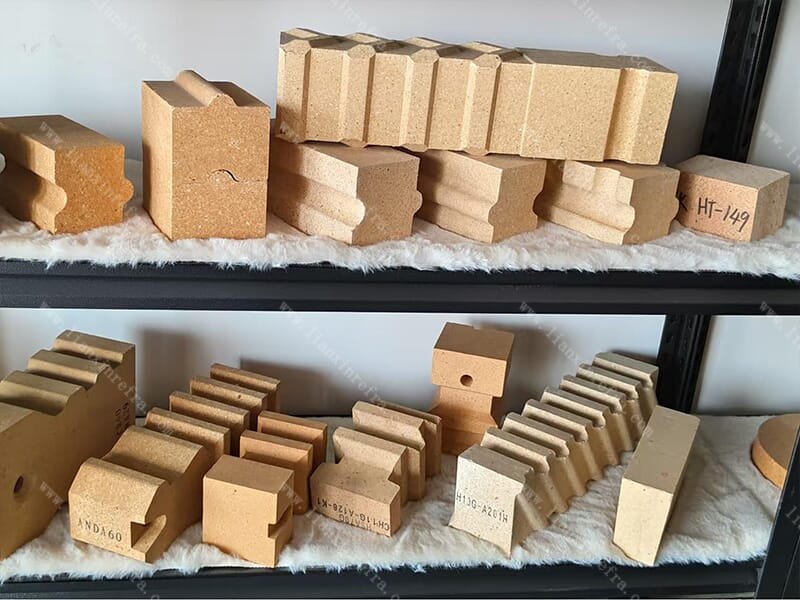
The hot spots in the melting pool of glass kilns reach temperatures as high as 1500-1600℃, requiring high-alumina fire bricks or corundum bricks with a refractoriness ≥1750℃. In low-temperature areas such as regenerators (800-1200℃), clay fire bricks are sufficient, balancing cost and practicality. Simultaneously, the bricks must match the glass composition. Ordinary glass containing alkali metals requires alkali-resistant magnesium aluminate spinel bricks, while special glasses containing boron or fluorine require high-purity corundum fire bricks to prevent brick corrosion and contamination of the molten glass.
High-Temperature Stability: Thermal shock resistance must withstand ≥50 water-cooling cycles without peeling, resisting sudden temperature changes in the kiln. Erosion resistance relies on low apparent porosity (≤18%) and high compressive strength (≥80MPa) to reduce continuous erosion from molten glass and dust. Volumetric stability requires a reheat linear change rate ≤±0.5% to prevent leakage at brick joints due to shrinkage or expansion at high temperatures.
For melting tanks where the walls/bottoms directly contact the molten glass, fused alumina bricks and magnesia-alumina spinel bricks are preferred. For refining tanks and flow channels, stability and anti-clogging are both important. Dense high-alumina bricks and zirconia-corundum fire bricks are the best choices. For regenerators and flues, heat insulation and wear resistance are paramount; clay bricks and lightweight high-alumina bricks offer excellent value. For small furnaces and burner nozzles, which withstand flame erosion, high-strength mullite fire bricks are more suitable.
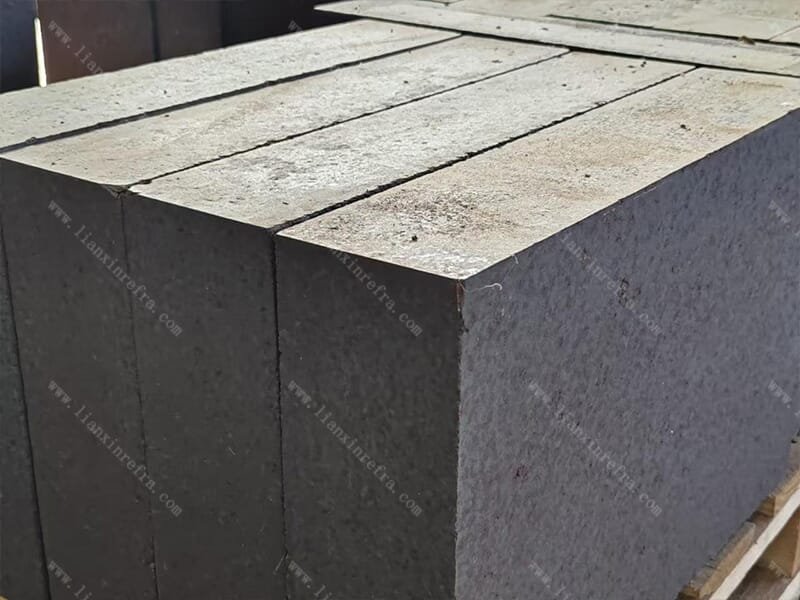
In addition, it is necessary to select compliant products that are non-radioactive and have low heavy metal leaching. While balancing cost-effectiveness, using high-end fire bricks in core areas and economical products in secondary areas, to achieve the optimal balance between service life and investment cost.