Address
Building 1, Zone 1, Greenland Binhu International City, Zhengzhou, Henan, China
Work Hours
Monday to Friday: 9AM - 7PM
Weekend: 10AM - 6PM
Address
Building 1, Zone 1, Greenland Binhu International City, Zhengzhou, Henan, China
Work Hours
Monday to Friday: 9AM - 7PM
Weekend: 10AM - 6PM

A converter is a metallurgical furnace with a rotating body, primarily used for blowing steel or matte. It is the most important steelmaking equipment in the modern steel industry and can also be used for smelting non-ferrous metals such as copper and nickel. Its core characteristic is that it requires no external heat source, relying on the physical heat and chemical reaction heat of the raw materials inside the furnace to maintain the smelting process. It boasts advantages such as high production efficiency and low cost, supporting the majority of global crude steel production.
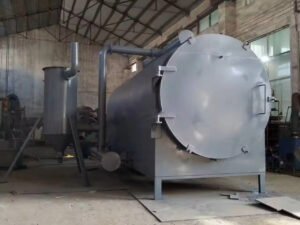
The converter has a simple yet robust structure. The furnace body is made of cylindrical steel plates, lined with refractory material to resist high-temperature corrosion. It is supported by bearings via rings and trunnions and can be tilted using mechanical devices for easy charging, blowing, and tapping. During smelting, the furnace charge mainly consists of molten iron and slag-forming materials (such as lime and quartz). A small amount of scrap steel can be added to adjust the temperature. The core process involves blowing in air or pure oxygen to oxidize impurities such as carbon, manganese, silicon, and phosphorus in the molten iron, removing harmful components and raising the temperature of the molten steel.
According to different standards, converters can be classified in several ways: based on the refractory material of the furnace lining, they can be divided into basic and acidic converters; based on the gas blowing location, they can be divided into top-blown, bottom-blown, and side-blown converters; and based on the blowing gas, they can be divided into air converters and oxygen converters. Among these, basic oxygen top-blown and top-and-bottom combined-blown converters are currently the most widely used types. The bottom-blown acidic converter, invented by Bessemer in 1856, laid the foundation for modern steelmaking. The advent of the oxygen converter in the 1950s further improved steelmaking quality and efficiency, becoming the mainstream technology in contemporary steelmaking.
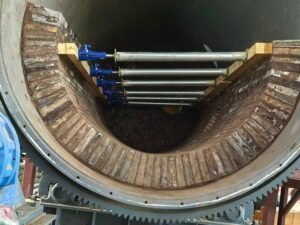
After blowing, the furnace body is tilted to pour qualified molten steel from the taphole into the ladle. Simultaneously, deoxidizers are added to adjust the composition. The molten steel can then be further cast into castings, ingots, or rolled into various types of steel products. The converter gas produced during the smelting process can be recycled after purification, achieving energy recycling. Today, converters are developing towards larger scale, higher intelligence, and lower carbon emissions, playing a core role in the green transformation of the steel industry and serving as one of the key pieces of equipment supporting modern industrial development.