Address
Building 1, Zone 1, Greenland Binhu International City, Zhengzhou, Henan, China
Work Hours
Monday to Friday: 9AM - 7PM
Weekend: 10AM - 6PM
Address
Building 1, Zone 1, Greenland Binhu International City, Zhengzhou, Henan, China
Work Hours
Monday to Friday: 9AM - 7PM
Weekend: 10AM - 6PM

Zircon bricks are refractory products made primarily from zirconium oxide (ZrO₂) or zircon (ZrSiO₄). Due to their high melting point, excellent erosion resistance, and thermal shock resistance, they are widely used in high-temperature industries such as glassmaking and metallurgy. Their classification methods are mainly as follows:
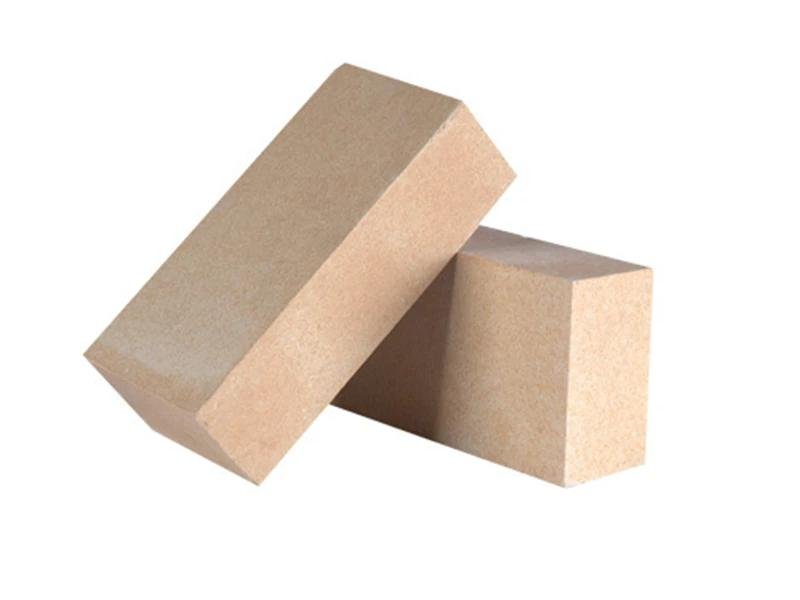
This is the most basic classification method, determining the material’s fundamental properties.
Fused Cast Zircon Bricks: These are made by melting the raw materials in an electric arc furnace and then casting them. They have a dense structure and extremely strong erosion resistance. The most typical example is fused cast zircon-corundum brick (AZS brick), commonly graded AZS-33#, 36#, 41#, etc., based on ZrO₂ content; higher content results in better erosion resistance.
Sintered Zircon Bricks: These are made by crushing, molding, and sintering the raw materials at high temperatures. Their porosity is usually higher than fused cast bricks. Common types include sintered zircon bricks and sintered zircon-corundum bricks, mainly used in contact with molten glass or as a transition layer material.
This is the most fundamental classification basis in the industry.
Zircon Bricks: Primarily composed of zircon (ZrSiO₄), with a ZrO₂ content typically around 65%. They exhibit good resistance to acidic slag and low-alkali glass, and are commonly used for steel ladle linings and the upper structure of glass kilns.
Zircon-Corundum Bricks (AZS): Belonging to the Al₂O₃-ZrO₂-SiO₂ ternary system, the main minerals are corundum and zircon. Based on the production process, they are further divided into fused cast zircon-corundum bricks and sintered zircon-corundum bricks, and are core materials for critical components such as glass kiln walls and flow channels.
Zirconium Oxide Bricks: Extremely high ZrO₂ content (usually above 90%), exhibiting outstanding high-temperature resistance and erosion resistance, used in the most demanding operating conditions.
Zircon bricks for glass furnaces: These have the largest usage, encompassing the AZS series and dense zircon bricks mentioned above, used in melting pools, working pools, and feed channels.
Zircon-containing bricks for metallurgy: These include alumina-zirconium-carbon and zirconium-carbon sliding nozzle bricks, stopper rods, etc., utilizing their thermal shock resistance and erosion resistance.
In general, the classification of zircon bricks is based on two main lines: production process and chemical composition. Different classifications directly determine their application scenarios and service life.