Address
Building 1, Zone 1, Greenland Binhu International City, Zhengzhou, Henan, China
Work Hours
Monday to Friday: 9AM - 7PM
Weekend: 10AM - 6PM
Address
Building 1, Zone 1, Greenland Binhu International City, Zhengzhou, Henan, China
Work Hours
Monday to Friday: 9AM - 7PM
Weekend: 10AM - 6PM

The new dry process rotary kiln is a core piece of equipment in the modern cement industry. Its primary application is as the central equipment in the cement clinker calcination system, undertaking the crucial task of ultimately sintering raw meal into qualified clinker.
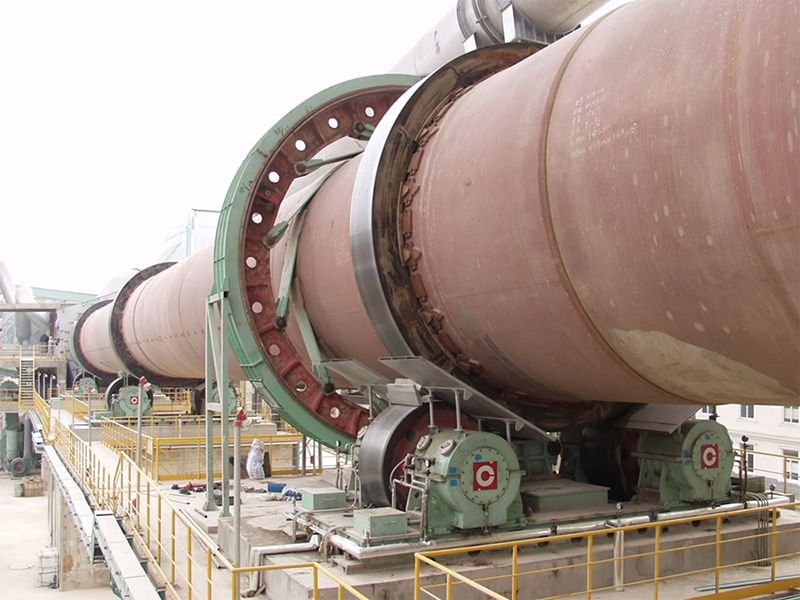
The core function of the new dry process rotary kiln is that raw meal, after being processed by the precalciner system, enters the rotary kiln and undergoes solid-phase reaction and liquid-phase sintering in a high-temperature environment exceeding 1450℃, ultimately forming cement clinker with tricalcium silicate and other mineral components as its main components. The slow rotation of the inclined cylinder allows the material to complete heat exchange and chemical reactions during axial tumbling. The calcined clinker is discharged from the kiln head and enters the cooler.
Besides cement clinker, this type of equipment also has applications in non-cement fields. Rotary kilns can be used to calcine bauxite, quicklime, aluminum hydroxide, and other materials, serving industries such as refractory materials, alumina, and metallurgy. In the environmental protection field, rotary kilns are also used as pyrolysis furnaces for solid and hazardous waste, for the co-processing of sludge and garbage, and for decomposing harmful components using their high-temperature alkaline environment.
From a system perspective, the application of new dry-process rotary kilns has shifted from the traditional “total calcination” to focusing on “clinker sintering.” Preheating and carbonate decomposition are largely handled by external systems, thus achieving a balance between high capacity and low energy consumption.