Address
Building 1, Zone 1, Greenland Binhu International City, Zhengzhou, Henan, China
Work Hours
Monday to Friday: 9AM - 7PM
Weekend: 10AM - 6PM
Address
Building 1, Zone 1, Greenland Binhu International City, Zhengzhou, Henan, China
Work Hours
Monday to Friday: 9AM - 7PM
Weekend: 10AM - 6PM

The cement industry primarily uses rotary kilns as high-temperature kilns, especially the new dry-process rotary kilns, which are the core calcining equipment in the modern cement industry.
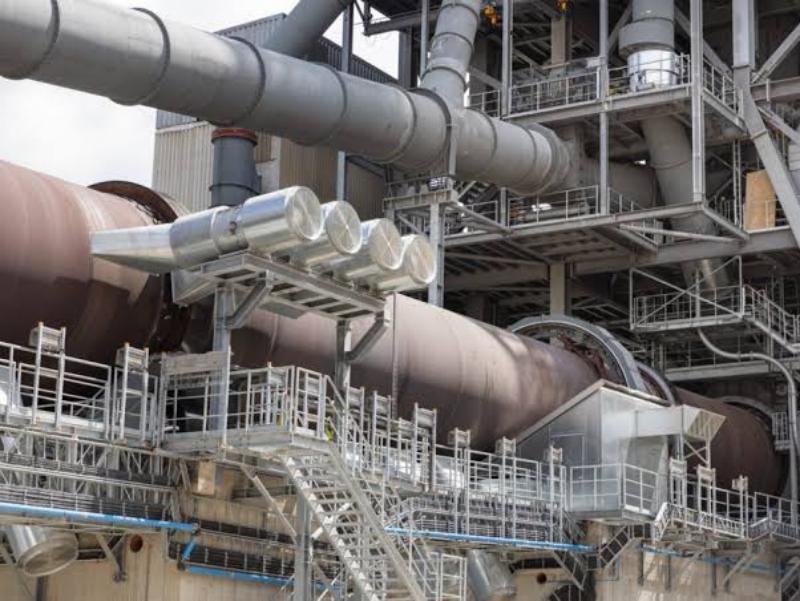
A rotary kiln is a slightly tilted, slowly rotating steel cylinder. Raw materials are added from the kiln tail (higher point) and continuously tumble towards the kiln head (lower point) as the cylinder rotates. Pulverized coal or other fuels are injected into the kiln head for combustion, generating high-temperature flames and airflow reaching 1450-1500℃. This heat exchange with the counter-flowing materials completes the calcination and sintering reaction, ultimately forming cement clinker. Based on the raw material preparation method, rotary kilns can be divided into dry-process and wet-process, with the dry process becoming the mainstream due to its lower heat consumption.
Vertical kilns were also once important equipment. They are vertically fixed kilns where materials move from top to bottom and air from bottom to top. However, due to limitations in capacity, quality, and environmental protection, mechanical vertical kilns have been listed as outdated technologies by the state and have gradually withdrawn from the market. In addition, there have been attempts in the past, such as fluidized bed kilns, but none of them have become mainstream.