Address
Building 1, Zone 1, Greenland Binhu International City, Zhengzhou, Henan, China
Work Hours
Monday to Friday: 9AM - 7PM
Weekend: 10AM - 6PM
Address
Building 1, Zone 1, Greenland Binhu International City, Zhengzhou, Henan, China
Work Hours
Monday to Friday: 9AM - 7PM
Weekend: 10AM - 6PM

The core use of lightweight alumina bricks (usually referring to lightweight high-alumina bricks) in kilns is as a heat insulation layer or thermal insulation layer to reduce heat loss from the furnace body, lower energy consumption, and reduce the furnace’s weight. It is generally not used in areas subjected to molten slag erosion or in direct contact with high-speed dust-laden airflow; instead, it is laid on the back or outer layer of the kiln’s working layer (such as dense refractory bricks).
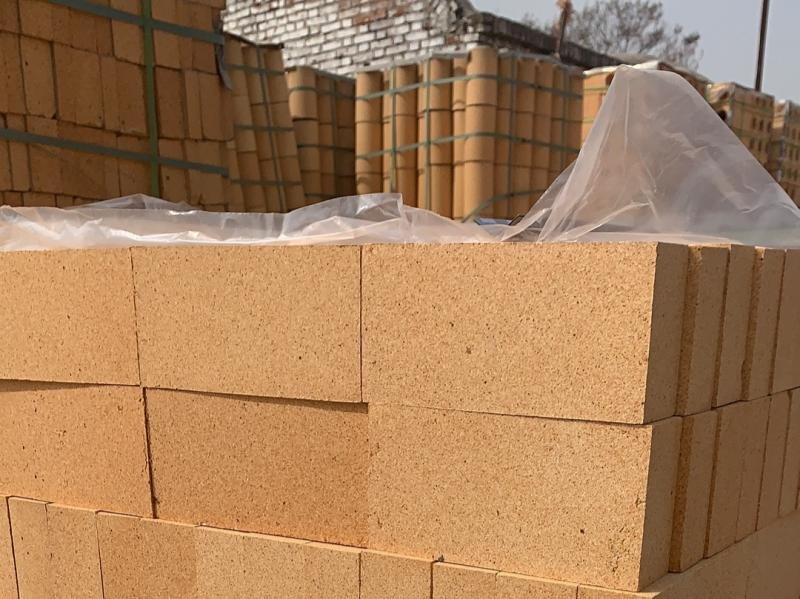
In terms of specific applications, lightweight high-alumina bricks are widely used in the insulation construction of industrial kilns such as blast furnaces, hot blast stoves, cement kilns, glass kilns, coking furnaces, and electric furnaces. In hot blast stoves, it is often laid on the back of high-temperature refractory bricks as a heat insulation layer, used in conjunction with silica refractory bricks to reduce the temperature of the furnace shell steel plate. In the insulation systems of cement kilns and glass kilns, it mainly serves to reduce heat loss and stabilize the furnace temperature. In addition, lightweight high-alumina bricks are often used as insulation linings in kilns using gases such as hydrogen and carbon monoxide as protective atmospheres due to their good chemical stability under reducing atmospheres.
The emphasis of their application is determined by the product’s own performance characteristics. Lightweight high-alumina bricks typically have an alumina content of over 48%, a bulk density of only 0.4 to 1.35 g/cm³, a porosity as high as 66% to 73%, and a low thermal conductivity. This high-porosity, low-density structure gives them excellent thermal insulation properties, but it also means that their room-temperature compressive strength is relatively low (typically 1 to 8 MPa), and their resistance to slag erosion and scouring is poor. Therefore, they are positioned as insulation materials rather than working layer materials.
Temperature limitations must be considered in practical applications. When lightweight high-alumina bricks are in direct contact with flames, their surface contact temperature should generally not exceed 1350℃. They are not suitable for areas directly eroded by molten slag or subjected to intense high-temperature scouring. Different grades have slightly different operating temperatures, and the appropriate grade should be matched according to the actual working conditions of the kiln when selecting a model.