Address
Building 1, Zone 1, Greenland Binhu International City, Zhengzhou, Henan, China
Work Hours
Monday to Friday: 9AM - 7PM
Weekend: 10AM - 6PM
Address
Building 1, Zone 1, Greenland Binhu International City, Zhengzhou, Henan, China
Work Hours
Monday to Friday: 9AM - 7PM
Weekend: 10AM - 6PM

The effectiveness of unshaped refractories in kilns highly depends on the entire chain of control, from material selection to maintenance. Negligence in any link can lead to a significant reduction in material performance, or even damage to the lining. The following are key considerations:
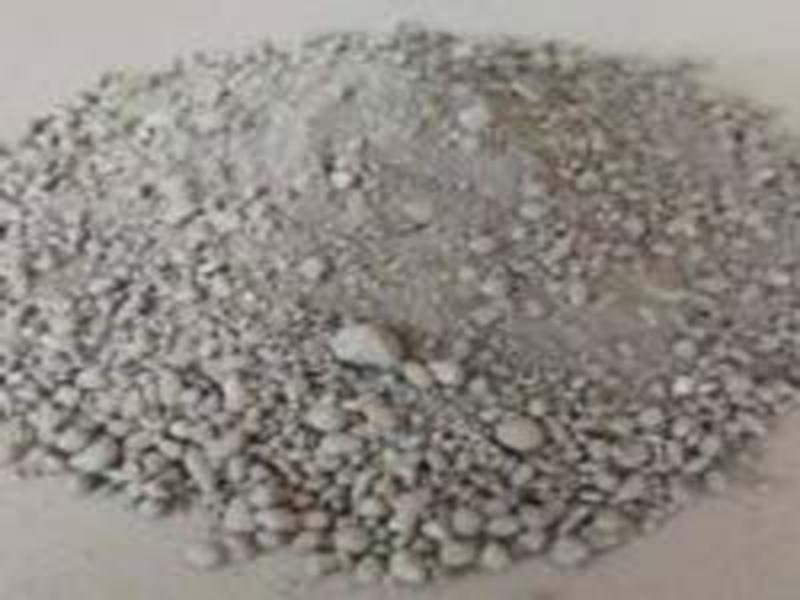
Construction is the cornerstone of performance. First, strictly control the amount of water added. While excessive water improves fluidity, it reduces density and strength, and increases the difficulty of water removal during kiln drying, easily causing surface powdering or cracking. Before construction, ensure that the formwork is tight, the anchors (such as Y-shaped studs) are firmly welded and in sufficient quantity, and leave expansion space (such as by applying asphalt) to buffer thermal stress. The mixed castable must be used within the specified time; refractory that has already partially set must not be used. After pouring, it should be cured under suitable temperature and humidity to prevent soluble alkali from migrating to the surface with moisture and reacting with CO₂, leading to “alkali efflorescence” and powdering.
Kiln drying is not simply heating; it’s a crucial process for removing free water and water of crystallization to achieve high-temperature performance. For dense materials such as low-cement castables, a strict heating curve must be established, with slow heating to ensure smooth steam removal. Rapid heating can cause steam pressure buildup, potentially leading to lining cracking or even explosion.
During kiln operation, materials face multiple challenges. First, volatile substances such as alkalis, chlorine, and sulfur from the raw materials can penetrate the material, reacting with components to form expansive minerals like potassium nepheline, causing “alkali cracking” or structural spalling. Second, the erosion and wear caused by high-velocity, dust-laden airflow on the kiln opening and bends cannot be ignored. Furthermore, frequent kiln start-ups and shutdowns or drastic temperature fluctuations can generate thermal shock stress, accelerating lining spalling.
The ignition and heating processes, as well as the kiln shutdown and cooling processes, must be strictly temperature controlled (e.g., a heating rate of 25~35℃/h is recommended), avoiding rapid heating and cooling. During use, avoid getting the lining wet, and inspect it regularly. If any local damage is found, repair it promptly with the same material.