Address
Building 1, Zone 1, Greenland Binhu International City, Zhengzhou, Henan, China
Work Hours
Monday to Friday: 9AM - 7PM
Weekend: 10AM - 6PM
Address
Building 1, Zone 1, Greenland Binhu International City, Zhengzhou, Henan, China
Work Hours
Monday to Friday: 9AM - 7PM
Weekend: 10AM - 6PM

Unshaped refractories are refractory materials supplied directly in bulk form without pre-firing, and can be formed on-site through methods such as casting, ramming, or spraying. Due to their short production cycle, energy efficiency, and good integrity, they are increasingly widely used in modern high-temperature industries. Their classification methods are diverse, but can be mainly divided according to the following three dimensions:
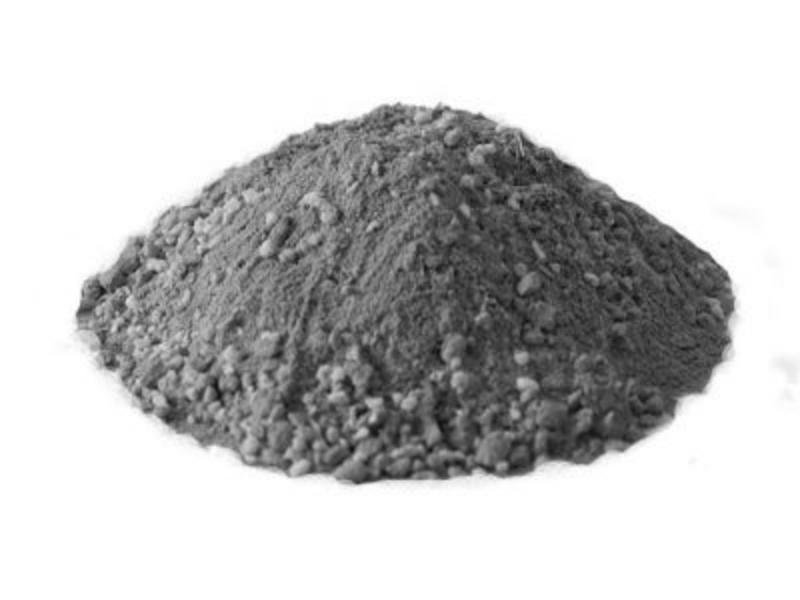
This is the most common and practically applicable classification method, directly determining the material’s application form.
Refractory Castables: Composed of aggregates, powders, and binders, they become fluid after being mixed with water or other liquids. They are applied by casting or pumping and are the most common type, accounting for up to half of the total volume of unshaped refractories.
Refractory Plastics: These are in a paste-like state, possessing high plasticity, and are applied by ramming or extrusion.
Refractory Rammed Mixtures: These are loose or semi-dry and require vigorous ramming to compact them.
Refractory spray coatings and projectiles: Applied by spraying or projectile machinery, commonly used for large-area lining construction or rapid repair.
Refractory mortars and coatings: Used as jointing materials for refractory brick masonry, or applied manually.
This classification determines the core performance characteristics and applicable environments of the materials.
Silica, clay, and high-alumina materials: Acidic to neutral aluminosilicate materials, widely used. High-alumina materials refer to materials with w(Al₂O₃) ≥ 45%.
Alkaline materials: Such as magnesia (mainly periclase), magnesia spinel, etc., with strong resistance to alkaline slag erosion, commonly used in steelmaking converters, tundishes, and other equipment.
Special materials: Such as materials containing silicon carbide, silicon nitride, or carbonaceous materials, possessing special wear resistance, thermal shock resistance, or thermal conductivity properties.
The bonding method determines the process of strength development in the material.
Hydraulic bonding: Hardens by hydration of cement or other binders in water, achieving strength at room temperature.
Chemical bonding: Develops strength through chemical reactions involving phosphates, water glass, or other chemical binders at room temperature or upon heating.
Ceramic bonding: Achieves high-temperature strength through the formation of ceramic bonds between particles during high-temperature use.
Organic bonding: Uses resins, asphalt, or other organic substances as temporary binders, which carbonize or volatilize upon initial heating.
In conclusion, the classification of unshaped refractories is multi-dimensional, with different classification methods complementing each other to guide the correct selection and application of materials.