Address
Building 1, Zone 1, Greenland Binhu International City, Zhengzhou, Henan, China
Work Hours
Monday to Friday: 9AM - 7PM
Weekend: 10AM - 6PM
Address
Building 1, Zone 1, Greenland Binhu International City, Zhengzhou, Henan, China
Work Hours
Monday to Friday: 9AM - 7PM
Weekend: 10AM - 6PM

Zircon bricks do not refer to a specific type of brick, but rather to a general term for refractory materials whose main components are zircon (ZrSiO₄) or zirconium oxide (ZrO₂). Due to their high melting point, excellent thermal shock resistance, and extremely strong chemical resistance, zircon bricks are highly concentrated in industrial fields with stringent material performance requirements, especially in the glass industry where they hold an irreplaceable position.
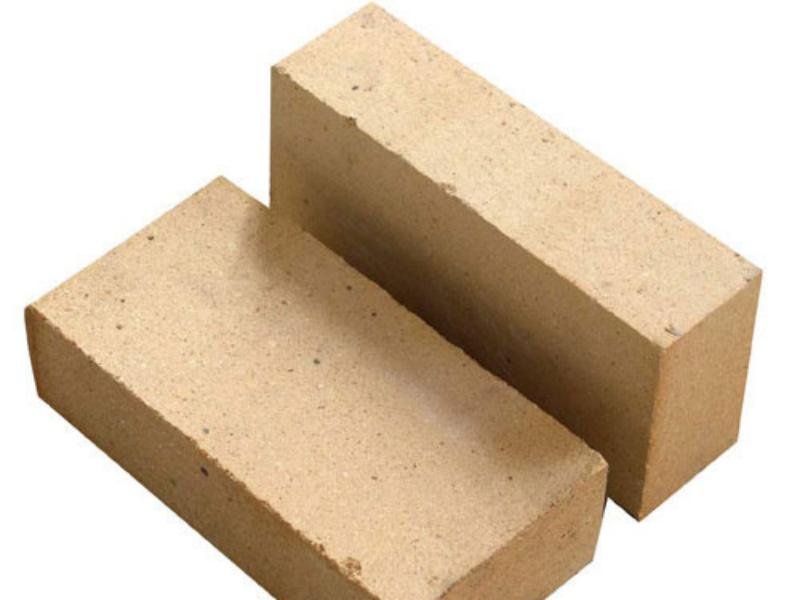
The core applications of zircon bricks are concentrated in the following areas:
This is the most important and widespread application area for zircon bricks. Different types of zircon bricks serve different parts of glass furnaces.
Critical parts that come into direct contact with molten glass: such as the walls of the melting pool, bottom lining bricks, and flow channels. These parts must withstand the intense scouring and chemical erosion of high-temperature molten glass. Fused zirconia-corundum bricks (AZS bricks) and dense zircon bricks, due to their extremely low apparent porosity and excellent erosion resistance, have become the standard choice for these applications. For example, models like AZS-33# and AZS-41# are common products categorized based on their zirconium oxide content.
Upper part of the kiln and areas experiencing temperature fluctuations: such as the breast wall and regenerator partition walls. Although these parts do not directly contact the molten glass, they must withstand high temperatures, flame erosion, and the corrosion of alkaline volatiles. Sintered zircon-corundum bricks or zircon bricks are commonly used in these applications due to their superior thermal shock resistance.
Specialty glass and environmental protection fields: In the production of high-quality glass such as electronic glass and photovoltaic glass, AZS fused bricks with ultra-low bubble precipitation rates are used to prevent bubble contamination of the molten glass. Furthermore, in environmental projects such as the vitrification of fly ash from waste incineration, high-zirconium bricks (approximately 80% ZrO₂ content) effectively extend the kiln’s lifespan due to their significantly superior corrosion resistance compared to ordinary AZS bricks (the corrosion rate is only about one-third that of AZS-41# bricks).
In the iron and steel industry, zircon bricks are mainly used as linings for steel ladles, especially in areas directly impacted by molten steel and in the slag line region. These areas need to withstand the intense scouring and chemical corrosion of molten steel and slag, and zircon bricks can significantly improve the service life of the ladle.
Chemical Furnaces: Utilizing their excellent chemical stability, they are used to resist corrosion from various acidic and alkaline media and solutions.
Wear-Resistant Equipment: Zirconium oxide bricks (with extremely high ZrO₂ content) are often used as linings for the cylinders of equipment such as ball mills due to their excellent wear resistance.
In summary, the application of zircon bricks closely revolves around the three keywords “high temperature,” “corrosion,” and “wear,” making them a key material for ensuring the long-term, stable operation of many high-temperature industrial processes.