Address
Building 1, Zone 1, Greenland Binhu International City, Zhengzhou, Henan, China
Work Hours
Monday to Friday: 9AM - 7PM
Weekend: 10AM - 6PM
Address
Building 1, Zone 1, Greenland Binhu International City, Zhengzhou, Henan, China
Work Hours
Monday to Friday: 9AM - 7PM
Weekend: 10AM - 6PM

Silica bricks are acidic refractory materials made from silica with a SiO₂ content ≥94%, combined with mineralizers and fired at high temperatures. The core consists of tridymite, cristobalite, and residual quartz.
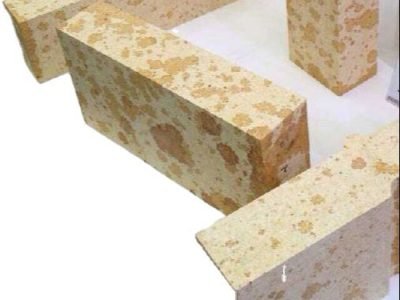
Their advantages lie in their high-temperature performance and resistance to acid erosion. The softening temperature under load reaches 1620~1670℃. The structure is stable at high temperatures and does not easily deform over long-term use. When heated to 1450℃, the volume expansion is only 1.5%~2.2%, enhancing the airtightness and load-bearing capacity of the masonry. They exhibit outstanding resistance to acid slag erosion and good tolerance to oxides such as CaO and FeO, making them suitable for acidic environments such as coke ovens and glass melting furnaces.
The disadvantages limit their application scenarios: Firstly, they have poor thermal shock stability, requiring only 1~4 water-cooled heat exchanges. Below 600℃, they are prone to cracking due to crystal transformation, necessitating strict control of heating and cooling rates.
Secondly, it is not resistant to alkaline slag corrosion and is easily damaged by alkaline oxides such as Al₂O₃, CaO, and K₂O, making it strictly prohibited for use in alkaline environments.
Thirdly, its refractoriness is limited (1690~1730℃), making it unsuitable for ultra-high temperature conditions. Furthermore, production requires high purity raw materials and stringent firing processes, resulting in higher costs than ordinary refractory materials.
In summary, silica bricks are ideal materials for load-bearing components in high-temperature acidic kilns, such as coke oven carbonization chambers and glass melting furnace walls. However, they are not suitable for conditions involving frequent rapid heating and cooling or high alkali content. Selection must be strictly matched to the furnace atmosphere and temperature profile.