Address
Building 1, Zone 1, Greenland Binhu International City, Zhengzhou, Henan, China
Work Hours
Monday to Friday: 9AM - 7PM
Weekend: 10AM - 6PM
Address
Building 1, Zone 1, Greenland Binhu International City, Zhengzhou, Henan, China
Work Hours
Monday to Friday: 9AM - 7PM
Weekend: 10AM - 6PM

Silica fire bricks are acidic refractory materials with silicon dioxide (SiO₂) as the main component (usually not less than 94%). They possess core advantages such as high refractoriness (1700~1730℃), good high-temperature volume stability, and high load softening temperature (1640~1670℃). However, they have poor thermal shock resistance and are susceptible to alkali corrosion. Therefore, they are mainly used in kilns with high-temperature, acidic atmospheres and no strong alkaline corrosion. In practical industrial production, silica fire bricks are commonly used in kilns covering multiple fields such as metallurgy, glass, ceramics, and building materials.
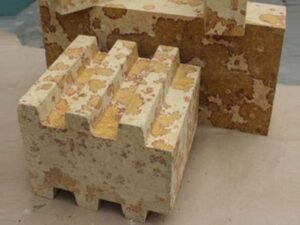
The metallurgical industry is the most widespread application field for silica fire bricks, with reverberatory furnaces being one of their classic suitable kilns. The core material for the dome of traditional small and medium-sized copper smelting reverberatory furnaces is silica brick. Because the dome is a high-temperature load-bearing part inside the furnace, it is constantly exposed to a high-temperature environment of 1200~1500℃. Silica bricks offer excellent high-temperature stability and load-bearing capacity, effectively meeting application requirements. Furthermore, these areas are less susceptible to erosion by alkaline slag, allowing them to fully leverage their performance advantages. Besides copper reverberatory furnaces, tin and nickel reverberatory furnaces operating in acidic slag environments can also utilize silica bricks for furnace roofs and walls above the slag line. However, modern large non-ferrous metal reverberatory furnaces, often employing suspended roofs and experiencing strong alkaline slag corrosion, are gradually replacing silica bricks with magnesia-based alkaline refractories. Additionally, silica bricks are used in coke ovens in the metallurgical industry, primarily in high-temperature areas such as regenerator checker bricks and combustion chamber walls, leveraging their high-temperature stability to ensure long-term continuous operation.
Various kilns in the glass industry are also significant applications of silica fire bricks. Due to the acidic atmosphere within the kilns during glass production, silica bricks exhibit excellent compatibility. High-temperature components such as pool walls, breast walls, and domes in flat glass melting furnaces are widely constructed using silica bricks. Especially in the dome area, where temperatures need to withstand 1500-1600℃, the high refractoriness of silica bricks effectively resists high-temperature erosion, ensuring the sealing and service life of the melting furnace. Furthermore, silica bricks are also selected for the furnace roof and walls of bottle and jar glass furnaces and tableware glass furnaces, constructed with silica refractory mortar to ensure stable kiln temperatures and prevent damage to the bricks from affecting the quality of glass products.
Silica fire bricks are also used in tunnel kilns and down-draft kilns in the ceramics industry. In the preheating and firing zones of ceramic tunnel kilns, temperatures can reach 1300-1500℃, and the atmosphere is slightly acidic. Silica fire bricks can be used to construct the kiln roof and walls; their high-temperature dimensional stability prevents brick deformation due to heat, ensuring smooth kiln passages. Down-draft kilns, as traditional ceramic firing kilns, also commonly use silica bricks for their roof and combustion chamber. Especially in small down-draft kilns, the low cost and high refractoriness of silica fire bricks are even more prominent, meeting the high-temperature requirements of ceramic firing. However, it’s important to note that silica bricks should be avoided in ceramic kilns using alkaline glazes or in alkaline firing atmospheres to prevent corrosion and damage.
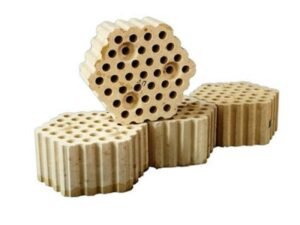
In the building materials industry, silica fire bricks are also used in specific areas of cement rotary kilns and lime kilns. In high-temperature sections of cement rotary kilns, such as preheaters and decomposition furnaces, where temperatures can reach 1000-1400℃ and the atmosphere is acidic, silica bricks can be used to enhance the equipment’s high-temperature resistance. However, silica bricks are unsuitable for the firing zone of rotary kilns due to their excessively high temperatures (exceeding 1600℃) and erosion by alkaline materials. In medium-to-high-temperature sections of lime kilns, such as the furnace roof and body, silica bricks can also be used in acidic atmospheres, but their lifespan is relatively short, requiring regular inspection and maintenance.
Furthermore, silica fire bricks can be used in other special high-temperature kilns, such as the roof and walls of carbon roasting furnaces, utilizing their high-temperature stability to ensure temperature uniformity during roasting. In roasting furnaces used in non-ferrous metal smelting, silica bricks can be used as lining materials in acidic atmospheres. It is particularly important to note that the core requirements for the application of silica bricks are “acidic atmosphere, no strong alkaline corrosion, and medium to high temperature.” If alkaline slag or alkaline dust exists in the kiln, or if the temperature fluctuates frequently (easily causing thermal shock), silica bricks must not be used, otherwise it will lead to brick cracking, melting loss, and a shortened kiln lifespan.
In summary, the application of silica fire bricks is mainly concentrated in medium-to-high temperature, acidic atmosphere kilns in industries such as metallurgy, glass, ceramics, and building materials, making them an indispensable refractory material in high-temperature industrial production.