Address
Building 1, Zone 1, Greenland Binhu International City, Zhengzhou, Henan, China
Work Hours
Monday to Friday: 9AM - 7PM
Weekend: 10AM - 6PM
Address
Building 1, Zone 1, Greenland Binhu International City, Zhengzhou, Henan, China
Work Hours
Monday to Friday: 9AM - 7PM
Weekend: 10AM - 6PM

In early March, a customer from the Republic of Uzbekistan contacted us. The customer needed 100 tons of magnesium-chromium spray coating for steel ladles. We first communicated and discussed the specifications and specific applications.
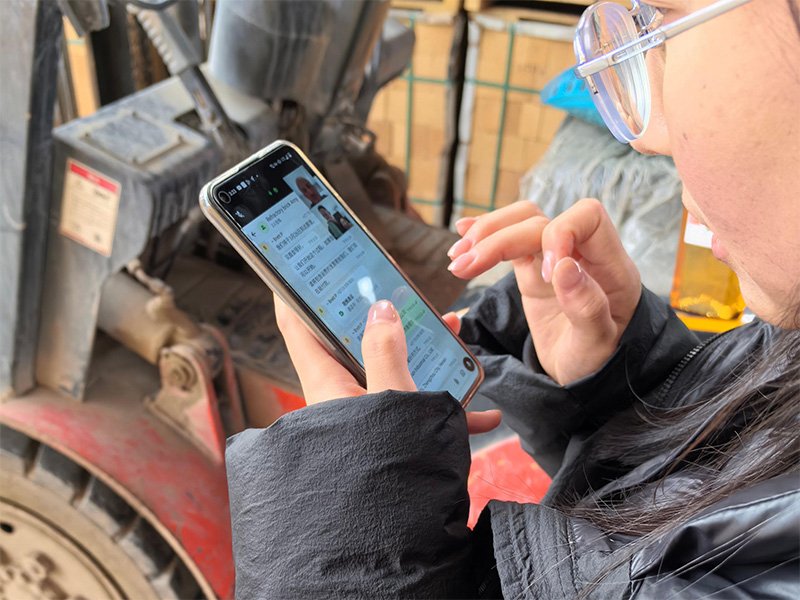
Subsequently, the customer held a video conference with us, requesting to visit our factory’s manufacturing process and show us the finished products. The customer toured our raw material workshop, production workshop, and finished product workshop via video. Seeing the rows of modern production lines, high-quality refractory bricks, and unshaped refractory materials, the customer expressed their approval of our factory’s capabilities. Finally, our technical staff and the customer discussed the specific production and applications of the spray coating.
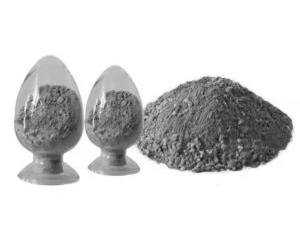
Spray coating is a type of unshaped refractory material, a refractory mixture used for patching or spraying with a spray gun. According to the patching method, it can be divided into wet patching (or slurry patching), semi-dry patching, and pyrometallurgical (flame) patching. Wet patching uses compressed air to spray a slurry containing 20-40% refractory powder, achieving high dispersion, high adhesion, and allowing for relatively uniform thin-layer patching. Semi-dry spraying involves wetting the refractory powder, which is then sprayed by compressed air, with water added at the nozzle. The water content is 11-14%, resulting in a lower adhesion rate but allowing for thicker layers. Pyroblasting, a type of dry spraying, involves delivering the spraying material into the flame of a fuel-oxygen spray gun. The material partially melts and adheres to the brick lining within the flame.
We look forward to finalizing our cooperation with our clients.