Address
Building 1, Zone 1, Greenland Binhu International City, Zhengzhou, Henan, China
Work Hours
Monday to Friday: 9AM - 7PM
Weekend: 10AM - 6PM
Address
Building 1, Zone 1, Greenland Binhu International City, Zhengzhou, Henan, China
Work Hours
Monday to Friday: 9AM - 7PM
Weekend: 10AM - 6PM

Unshaped refractory materials, also known as bulk refractory materials, are composed of bulk particles and fine powders. They require neither firing nor shaping before use. Their composition and processing can be flexibly modified as needed. For example, the composition and particle size of the refractory, the type and amount of binder, the selection and adjustment of admixtures (such as plasticizers, hardening accelerators, retarders, water-reducing agents, etc.), and the diversification of construction methods (pouring, tamping, spraying, casting, plastic construction, etc.) have enabled a significant leap forward in the development of refractory brick shapes towards larger, more irregular, and integrated structures, thus being called second-generation refractory materials.
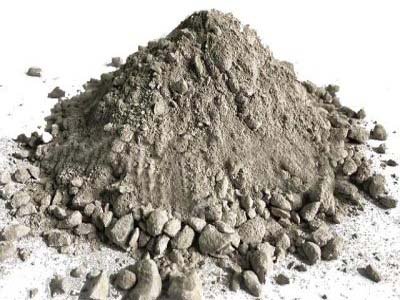
Unshaped refractory materials are one of the important basic materials in the application of refractory lining technology in high-temperature kiln industry. Refractory castables are an important type of unshaped refractory materials. Their key characteristics are short delivery cycles, no limitation on equipment shape, and the ability to be used directly after on-site molding and baking of a loose mixture with suitable anchors without pre-calcination. Unshaped refractory castables can be used to create seamless linings, also known as monolithic refractory materials. High-alumina castables, high-alumina low-cement castables, steel fiber abrasion-resistant castables, and corundum castables, among other monolithic refractory materials, have been widely used in the lining design of cement kilns and have served as refractory layers in various parts of thermal equipment for many years.
A material with good fluidity after being mixed with water, also known as a grout. After molding, it needs proper curing to allow it to set and harden, and can be used after baking according to a specific system. Grouting materials use aluminosilicate clinker, corundum materials, or basic refractory clinker as aggregates. Lightweight grouting materials use expanded perlite, vermiculite, ceramsite, and alumina hollow spheres as aggregates. Binders include calcium aluminate cement, water glass, ethyl silicate, polyaluminum chloride, clay, or phosphates. Admixtures are determined according to the application, and their function is to improve workability and enhance physical and chemical properties.
Grouting materials can be constructed and formed using methods such as vibration, pumping, pressure injection, and spraying. When used as a monolithic lining, grouting materials are often used in conjunction with metal or ceramic anchors. Adding stainless steel fiber reinforcement can further improve its resistance to mechanical vibration and thermal shock. Grouting materials are used as linings for various heat treatment furnaces, ore roasting furnaces, catalytic cracking furnaces, conversion furnaces, etc., and also as linings for smelting furnaces and high-temperature melt channels. Examples include lead-zinc melting furnaces, tin baths, salt bath furnaces, steel or iron tapping troughs, steel ladles, and suction nozzles for vacuum circulation degassing devices for molten steel.
Plastic materials are clay or clay blanks with plasticity. They easily deform without cracking when subjected to appropriate external force. After the stress is relieved, they no longer deform. Plastic materials include semi-silica, clay, high-alumina, zircon, and carbonaceous materials, as well as lightweight plastics. Plasticizers must be added to refractory linings. These refractory materials are mostly highly plastic clays, and plasticizers can be used to further improve their plasticity. Plasticizers include carboxymethyl cellulose, dextrin, and lignin sulfonates. The binders used in refractory linings include plastic clay, phosphoric acid, aluminum dihydrogen phosphate, and aluminum sulfate. Alumina-based refractory linings with added phosphoric acid or phosphate binders will react chemically with alumina during storage to form insoluble aluminum orthophosphate, causing the lining to harden. Therefore, preservatives such as oxalic acid, citric acid, and acetylacetone must be added.
Construction methods generally employ tamping or vibration methods. When using refractory linings to construct monolithic furnace linings, metal or ceramic anchors must be used. Refractory linings are used as linings for thermal equipment such as soaking furnaces, heating furnaces, and boilers, and are also used to wrap water-cooled pipes in heating furnaces.
A refractory mixture used for spraying or patching with a spray gun. According to the spraying method, it can be divided into wet spraying (or slurry spraying), semi-dry spraying, and pyroblasting (flame spraying). Wet spraying uses compressed air to spray a slurry containing 20-40% refractory powder, achieving high dispersion and adhesion, allowing for relatively uniform thin-layer spraying. Semi-dry spraying involves adding water (11-14%) to the nozzle to wet the refractory powder sprayed by compressed air. The adhesion rate is lower, but thicker layers can be applied. Pyroblasting is a type of dry spraying, where the spraying material is delivered into the flame of a fuel-oxygen spray gun, where it partially melts and adheres to the brick lining.
Spraying materials include aluminosilicate, aluminosilicate-zirconium, magnesia, magnesia-calcium, and magnesia-chromium. The binders used include sodium silicate, phosphates, polyphosphates, asphalt, and resins. To improve adhesion, additives such as clay, bentonite, and lime are added. To ensure proper sintering of the sprayed refractory, sintering aids such as serpentine, pure olivine, lime, refractory clay, and iron oxide are added.
Materials applied to refractory brick linings. Depending on the application requirements and construction methods, refractory coatings are formulated into paste or slurry forms. The binders used vary depending on the material; for example, alkaline coatings for continuous casting tundishes use phosphates, polyphosphates, and magnesium sulfate. High-alumina coatings use clay, aluminum dihydrogen phosphate, aluminum chromium phosphate, and water glass. Plasticizers and other admixtures are generally added to improve the coating’s spreadability. Coatings are mainly used as protective coatings for the linings of various thermal equipment or for repairing localized damage to brick linings.
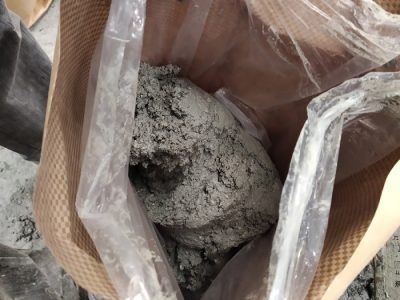
A loose refractory material with extremely low or no plasticity. Materials include siliceous, clayey, high-alumina, corundum, zircon, silicon carbide, carbonaceous, and magnesia materials. Depending on the material and application conditions, ramming mixes can use inorganic or organic binders similar to those used for castable refractory. Examples include water-soluble dextrin, carboxymethyl cellulose, lignin, sulfonates, and polyvinyl alcohol. And water-resistant and thermoplastic materials such as paraffin wax, asphalt, tar, phenolic resin, and atactic polypropylene.
Ramming mixes are applied using forced ramming, resulting in lower porosity and higher density. Therefore, among monolithic refractories, ramming mixes are particularly suitable for lining furnaces and various containers holding molten metal, such as hearths of open-hearth and electric furnaces, linings of various induction furnaces, blast furnace tapping channels, and steel ladles.
A semi-dry mortar material used for lining construction by projecting it using a projector. Primarily used for constructing the inner lining of monolithic steel ladles. Materials include siliceous, waxy, clayey, high-alumina, and zircon-based materials. High-siliceous and high-alumina projectile mixes are most commonly used.