Address
Building 1, Zone 1, Greenland Binhu International City, Zhengzhou, Henan, China
Work Hours
Monday to Friday: 9AM - 7PM
Weekend: 10AM - 6PM
Address
Building 1, Zone 1, Greenland Binhu International City, Zhengzhou, Henan, China
Work Hours
Monday to Friday: 9AM - 7PM
Weekend: 10AM - 6PM

Electric arc furnace steelmaking is a complex high-temperature metallurgical process, with furnace temperatures reaching 1700℃~1800℃. The temperature in the arc zone can even reach 4000℃, while the furnace faces harsh conditions such as slag erosion, rapid heating and cooling, and mechanical impact. Refractory materials serve as the “protective barrier” for the electric arc furnace, and their selection directly determines the furnace lining life, production efficiency, and steelmaking costs. Therefore, the selection of refractory materials for electric arc furnaces requires comprehensive consideration of factors such as furnace structure, smelting process, and damage factors, following scientific selection principles that balance performance, cost, and practicality. The following are specific selection methods and key points:
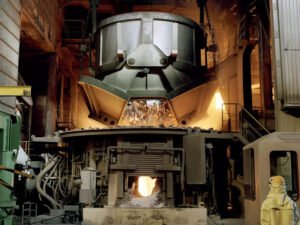
The primary prerequisite for selecting refractory materials for electric arc furnaces is clarifying the core performance requirements, which is the foundation for withstanding harsh operating conditions.
Electric arc furnace refractory materials must possess five core properties: First, high refractoriness and a low softening point under load, ensuring that they do not melt, soften, or deform under long-term high-temperature exposure, meeting the requirements of high-temperature radiation during the reduction period. Second, it must possess excellent thermal shock resistance to withstand rapid heating and cooling of the charging charge after tapping (temperature fluctuations can reach over 1000℃), preventing lining spalling and cracking. Third, it must have superior slag resistance to resist the erosion of components such as SiO₂, Al₂O₃, and Fe₂O₃ in the slag, while also adapting to the scouring effects caused by changes in slag fluidity. Fourth, it must have sufficient high-temperature mechanical strength to resist the impact of scrap charging, the scouring effect of molten steel stirring, and the effects of furnace vibration. Fifth, it must have low thermal conductivity and volume stability to reduce heat loss and prevent cracks caused by volume changes during use. In addition, the furnace bottom of a DC electric arc furnace must also possess good electrical conductivity to meet the electrode conduction requirements.
Categorization and selection are crucial, considering the different working environments of different parts of the electric arc furnace. Different parts bear different heat loads and degrees of erosion, requiring targeted matching of refractory materials.
The furnace roof is a weak point in electric arc furnaces, constantly exposed to direct arc radiation, smoke erosion, and temperature fluctuations. Early models commonly used silica bricks, but their service life was only a few dozen heats, and they have been gradually replaced by high-alumina bricks. High-alumina bricks have high refractoriness and good thermal shock resistance, with a service life of 80-200 heats, and even up to 600 heats in small electric arc furnaces.
Large ultra-high power electric arc furnaces and direct-current electric arc furnaces use water-cooled furnace roofs. The triangular area (around the electrodes) requires precast corundum or chromium corundum castables due to extremely high heat loads to improve erosion and thermal shock resistance.
The furnace walls are divided into general areas, slag line areas, and hot spots, requiring different selection methods. General furnace walls can use magnesia bricks, dolomite bricks, or asphalt-bonded magnesia ramming mix to meet basic high-temperature resistance requirements. The slag line zone, subjected to severe erosion by molten slag and scouring by molten steel, is the area most severely damaged by the furnace wall. Magnesia-carbon bricks are the preferred choice due to their excellent slag resistance and thermal shock resistance, offering a service life of over 300 heats, significantly extending furnace life by replacing traditional magnesia-chrome bricks.
At hot spots near the electrodes, magnesia-carbon bricks made from high-purity magnesia sand should be used, with added metal powder to promote densification and enhance resistance to high-temperature erosion. Furthermore, the inner surface of the water-cooled furnace wall can be sprayed with refractory coatings to form a slag-coated protective layer, reducing refractory material consumption.
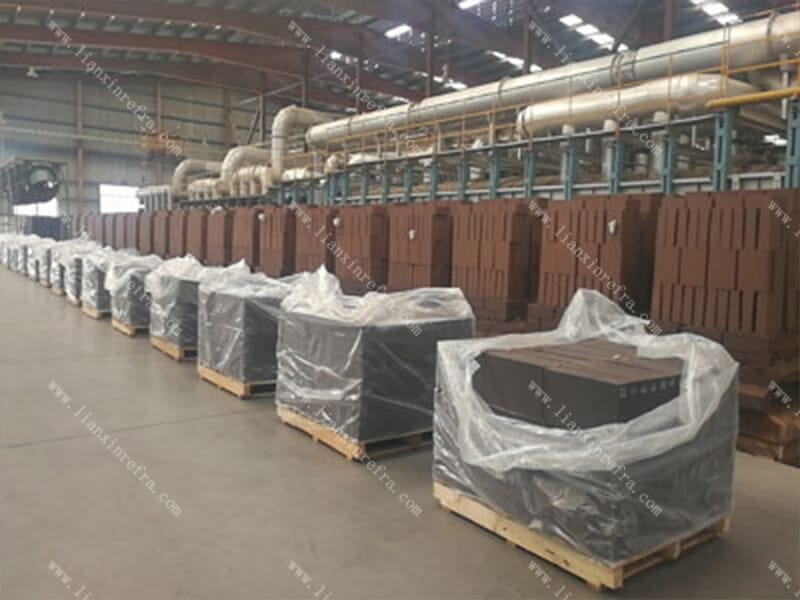
The furnace bottom and slope are areas where molten steel collects, bearing the impact of the furnace charge and long-term immersion in molten steel. Therefore, the selection of refractory materials must balance strength and erosion resistance. The furnace bottom of alkaline electric arc furnaces generally uses magnesia refractories, constructed in two layers. The lower layer uses magnesia bricks or bitumen-bonded magnesia bricks as a permanent lining, while the upper layer uses magnesia or magnesia-calcium-iron ramming mix as the working layer. Magnesia-calcium-iron dry ramming mix is convenient to construct and has a fast sintering speed, reducing refractory material consumption to below 2 kg/t. The furnace bottom of a DC electric arc furnace requires conductive refractory materials, commonly using conductive magnesia-carbon bricks with a carbon content of around 18%. These bricks must have low resistivity, good high-temperature mechanical properties, and a balance between conductivity and corrosion resistance. The slag line area on the upper part of the furnace slope suffers from severe erosion and requires regular spraying maintenance. Magnesia-based spraying materials can be used to extend service life.
The tapping system (tap and trough) is subjected to high-speed scouring by molten steel and slag erosion; therefore, the selection of materials must prioritize wear resistance and corrosion resistance. Traditional side-type tapping troughs can be constructed using high-alumina bricks or integrally cast high-alumina castables. Eccentric bottom taps (EBTs) are widely used; their perimeter is constructed with magnesia-carbon bricks, and the tapping pipe uses magnesia-carbon bricks or Al₂O₃-SiC-C bricks. Optimized aperture design can balance tapping efficiency and service life, avoiding frequent replacements.
In addition to selecting materials based on location, adjustments must also be made based on the smelting process and furnace type characteristics.
Basic electric arc furnaces primarily smelt high-quality alloy steels, prioritizing basic refractories (magnesia, magnesia-carbonaceous) and combining them with neutral refractories (high-alumina, corundum).
Acidic electric arc furnaces can utilize silica refractories, offering better resistance to acidic slag erosion. Compared to AC electric arc furnaces, DC electric arc furnaces exhibit more uniform temperature distribution and lower refractory material loss, but the furnace bottom requires special consideration for conductivity. Ultra-high-power electric arc furnaces, with their high production efficiency and large heat load, necessitate the use of high-density, low-porosity refractories to minimize high-temperature damage.
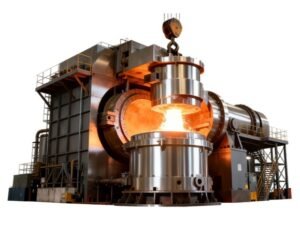
Cost control and environmental requirements must also be considered during the selection process.
While meeting performance requirements, avoid excessive pursuit of high-end materials. Low-cost materials such as clay refractory bricks can be used in non-critical components, while high-performance materials should be selected for critical components, achieving a balance between cost and lifespan. Simultaneously, following the trend towards low-carbon and chromium-free development, the use of chromium-containing refractory materials should be reduced, and low-carbon magnesia-carbon bricks and chromium-free magnesia materials should be selected, balancing environmental protection and service life. Furthermore, ease of construction must be considered. Monolithic refractories (castables, rammed mixes) offer high construction efficiency and good integrity, and can be widely used in furnace roofs, furnace walls, and other parts. Precast components can shorten the construction cycle and improve construction quality.
In summary, the selection of refractory materials for electric arc furnaces should adhere to the principles of “performance matching, zoned selection, cost consideration, and process compatibility.” It is crucial to clearly define the damage factors and performance requirements of different parts, and to rationally select the type and specifications of refractory materials based on the furnace type, steel grade, and environmental requirements. Furthermore, standardized construction and maintenance are essential to maximize furnace lining life, reduce production costs, and ensure the efficient and stable operation of the electric arc furnace.