Address
Building 1, Zone 1, Greenland Binhu International City, Zhengzhou, Henan, China
Work Hours
Monday to Friday: 9AM - 7PM
Weekend: 10AM - 6PM
Address
Building 1, Zone 1, Greenland Binhu International City, Zhengzhou, Henan, China
Work Hours
Monday to Friday: 9AM - 7PM
Weekend: 10AM - 6PM

Reverberatory furnaces are widely used in metallurgy, chemical industry, and other sectors. Their furnace chambers are subjected to harsh environments such as high temperatures, molten slag erosion, and thermal shock for extended periods. Therefore, the requirements for the high-temperature resistance, erosion resistance, and thermal stability of the kiln bricks are extremely high. In actual production, the most commonly used kiln bricks for reverberatory furnaces are mainly three types: silica bricks, clay bricks, and high-alumina bricks, each suitable for different temperature zones and working conditions to ensure stable equipment operation.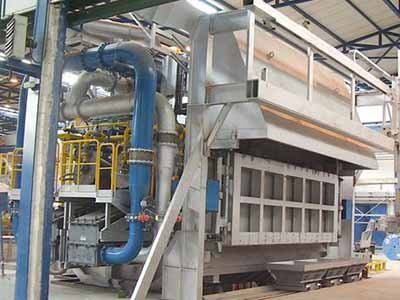
Silica bricks are the preferred kiln bricks for the high-temperature zones of reverberatory furnaces and are one of the most widely used varieties. Their main component is silicon dioxide (content ≥93%), with a refractoriness of 1670~1730℃. They possess excellent high-temperature resistance and resistance to acidic molten slag erosion, good thermal shock stability, and can withstand frequent temperature fluctuations in the furnace chamber. Silica bricks are mainly used in the upper part of the furnace chamber and the furnace roof—the high-temperature core areas of the reverberatory furnace. These parts are subjected to high-temperature radiation for extended periods, requiring the highest temperature resistance limits for the kiln bricks. Silica bricks can effectively extend the service life of the furnace body.
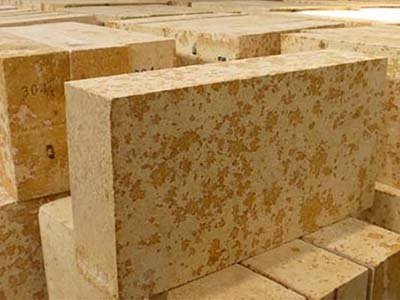
Clay bricks are commonly used kiln bricks in the low-temperature zone of reverberatory furnaces, offering excellent cost-effectiveness and the widest range of applications. Their main components are alumina (30%~48%) and silica, with a refractoriness between 1580~1770℃. They possess good permeability and thermal shock resistance, and are inexpensive, easy to install, and easy to maintain. Clay bricks are frequently used in the lower part of the furnace walls, flues, and furnace doors—areas with relatively low temperatures (800~1200℃)—meeting the needs of the medium- and low-temperature zones while reducing equipment construction costs.
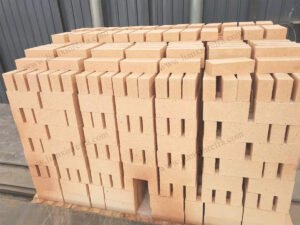
High-alumina bricks are suitable for high-temperature areas in reverberatory furnaces that are heavily affected by molten slag corrosion. Their performance falls between that of silica bricks and clay bricks. With an alumina content ≥48%, a refractoriness exceeding 1770℃, and extremely strong resistance to molten slag corrosion, wear resistance, and high-temperature resistance, their thermal stability is superior to that of silica bricks. High-alumina bricks are primarily used in reverberatory furnaces, particularly in areas directly contacting molten slag and high-temperature melt, such as the furnace bottom, furnace slope, and taphole. These areas are susceptible to corrosion and wear, and high-alumina bricks effectively improve the durability of these areas, reducing maintenance frequency.

In summary, silica bricks, clay bricks, and high-alumina bricks, each with its own performance advantages, cover different temperature and operating conditions within reverberatory furnaces and are the three most commonly used types of furnace bricks in actual production. A reasonable combination of these three types of kiln bricks can ensure stable operation of the reverberatory furnace while also considering operating costs, thus meeting the actual needs of industrial production.