Address
Building 1, Zone 1, Greenland Binhu International City, Zhengzhou, Henan, China
Work Hours
Monday to Friday: 9AM - 7PM
Weekend: 10AM - 6PM
Address
Building 1, Zone 1, Greenland Binhu International City, Zhengzhou, Henan, China
Work Hours
Monday to Friday: 9AM - 7PM
Weekend: 10AM - 6PM

A reverberatory furnace is a chamber-type flame furnace that primarily utilizes radiative heat transfer. It is mainly used for non-ferrous metal smelting and hot processing and is an important piece of equipment in the metallurgical and chemical industries. Its heat transfer relies not only on flame reflection but also primarily on the radiation from the furnace top, walls, and hot gases, unlike furnaces where fuel and materials are in direct contact. This makes it widely applicable.
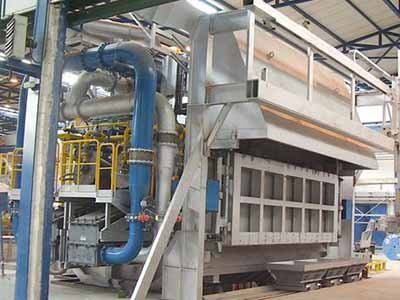
The reverberatory furnace has a relatively simple structure, mainly composed of three core parts: a combustion chamber, a smelting chamber, and an exhaust flue. The furnace body is lined with refractory materials and is equipped with auxiliary devices such as charging, blasting, and exhaust systems. The furnace foundation must be solid and load-bearing. Different refractory materials are selected for the furnace bottom, walls, and roof according to the operating temperature to ensure high-temperature resistance, corrosion resistance, and extended service life.
Its applications are primarily in non-ferrous metal smelting, processing ores and concentrates such as copper, nickel, and tin. It is particularly suitable for fine-grained powders and is also used in ferroalloy smelting, pyrometallurgical refining of metals, and roasting processes. It plays a vital role in the copper and tin smelting industries. In addition, modern reverberatory furnaces are widely used in recycled metal recovery, meeting the needs of medium- to large-scale smelting.
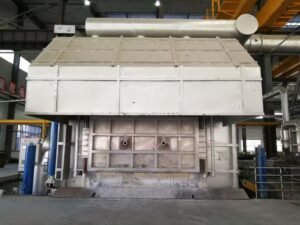
Reverberatory furnaces have advantages such as low investment, wide fuel adaptability, convenient operation, and ease of large-scale production, but they also have disadvantages such as high fuel consumption, significant metal oxidation loss, and flue gas pollution. Today, through technological optimization such as oxygen-enriched blast furnaces, waste heat recovery, and upgraded refractory materials, their energy efficiency and environmental friendliness are continuously improving, meeting the green transformation needs under the “dual-carbon” strategy, and they continue to play an important role in industrial production.