Address
Building 1, Zone 1, Greenland Binhu International City, Zhengzhou, Henan, China
Work Hours
Monday to Friday: 9AM - 7PM
Weekend: 10AM - 6PM
Address
Building 1, Zone 1, Greenland Binhu International City, Zhengzhou, Henan, China
Work Hours
Monday to Friday: 9AM - 7PM
Weekend: 10AM - 6PM

The quality of construction directly determines the service life of the kiln. Under high-temperature conditions, standardized construction can effectively delay damage and reduce production costs for enterprises.
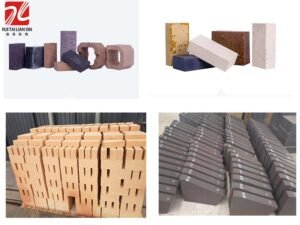
Henan Ruitai Lianxin Refractory Materials Co., Ltd. has been deeply involved in the industry for many years. We not only supply high-alumina bricks, grade one high-alumina bricks, magnesia-carbon bricks, low-carbon magnesia-carbon bricks, magnesia-alumina spinel bricks, and corundum-mullite bricks, but also provide professional construction guidance and damage solutions.
Select qualified refractory bricks, focusing on checking the integrity of the edges and corners of core brick types such as grade one high-alumina bricks and magnesia-carbon bricks. Remove bricks with missing corners, cracks, or dimensional deviations.
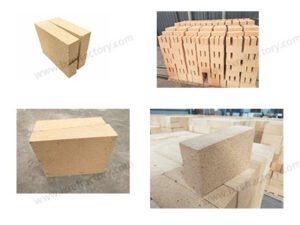
Clean the inner wall of the kiln, ensuring the surface is free of dust, rust, and debris. Match the special refractory mortar according to the brick type and material. For example, magnesia mortar used for laying magnesia-carbon bricks and high-alumina mortar used for laying high-alumina bricks should be prepared and used immediately; the use of partially set mortar is strictly prohibited.
The mortar joint width must be strictly controlled within 2mm to ensure the mortar is full and without gaps.
Tap the bricks with a rubber mallet to ensure that the surface of the magnesia-alumina spinel bricks, corundum-mullite bricks, etc., is tightly bonded to the kiln body, with no gaps at the four corners.
The interlocking bricks must be secure; specially designed interlocking bricks should be used preferentially, and processed Grade 1 high-alumina bricks should be avoided as interlocking bricks.
Uneven mortar joints, brick tilting, or voids can lead to stress concentration in core brick types such as magnesia-carbon bricks and high-alumina bricks. Uneven stress distribution in magnesia-alumina spinel bricks at high temperatures easily leads to cracking and spalling.
Failure to provide expansion joints as per specifications causes corundum-mullite bricks to expand and compress due to heat, directly resulting in masonry damage. Low-carbon magnesia-carbon bricks, especially those in the converter slag line area, are particularly prone to accelerated damage due to improper construction.
Rapid temperature changes generate thermal stress. Repeated exposure to this stress can easily cause corundum-mullite bricks and high-alumina bricks to crack or even peel off.
Erosion from slag and molten metal can damage the carbon bond structure of magnesia-carbon bricks and low-carbon magnesia-carbon bricks, leading to melting and wear.
Prolonged contact with alkaline slag in cement kilns can easily trigger chemical reactions, resulting in a porous brick structure. Vapor deposition within the brick pores can also cause cracking and deformation.
Select specific brick types suitable for the operating conditions. For example, low-carbon magnesia-carbon bricks are preferred for converter slag lines, while ordinary magnesia-carbon bricks are used for furnace walls.
Strictly adhere to the corresponding brick type’s construction specifications and strengthen quality control during construction. After construction, the bricks are slowly dried according to the heating curve to remove moisture from the bricks and mortar. This is to prevent high-alumina bricks and magnesia-carbon bricks from cracking due to rapid moisture evaporation.
Henan Ruitai Lianxin provides customized refractory brick products. Including core types such as high-alumina bricks, magnesia-carbon bricks, low-carbon magnesia-carbon bricks, magnesia-alumina spinel bricks, and magnesia-chrome bricks.
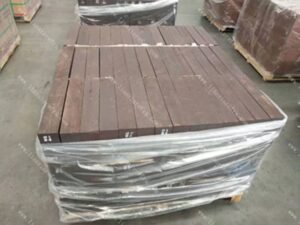
Also, dedicated construction guidance is provided, and customized damage prevention and control plans are developed for different kiln types.
Our professional team conducts on-site inspections to promptly identify potential hazards in refractory bricks such as magnesia-carbon bricks and high-alumina bricks, extending their service life.
If you require refractory brick procurement, construction guidance, or damage analysis, please contact us! Our professional team provides comprehensive support, building a solid safety barrier for your production.