Address
Building 1, Zone 1, Greenland Binhu International City, Zhengzhou, Henan, China
Work Hours
Monday to Friday: 9AM - 7PM
Weekend: 10AM - 6PM
Address
Building 1, Zone 1, Greenland Binhu International City, Zhengzhou, Henan, China
Work Hours
Monday to Friday: 9AM - 7PM
Weekend: 10AM - 6PM

As the core equipment in lead smelting, lead smelting converters operate under harsh and complex conditions. In order to enduring long-term high-temperature smelting, slag erosion, lead penetration, and flue gas scouring. The selection of kiln bricks directly determines the converter’s service life, production efficiency, and operating costs, and is a crucial link in ensuring the stability of the smelting process.
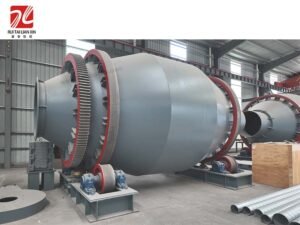
The selection of kiln bricks should be based on the different operating conditions in different areas of the lead smelting converter, following the principle of “suitability first, with economic considerations as a secondary consideration.”
The bottom area requires special attention to resist lead penetration. Because the high compressive strength of high-alumina bricks and the impermeable properties of the compacted mixture can effectively prevent the penetration and corrosion of liquid lead, high-alumina bricks should be given priority as the bedding layer, combined with magnesium oxide or high-strength impermeable compacted mixture.
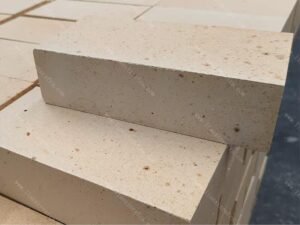
The erosion is most severe in the molten pool and slag line areas. Electrofused magnesia-chrome bricks with strong slag resistance should be selected. In order to further enhancing erosion resistance, we can increase the Cr₂O₃ content. This also prevents high-alumina bricks from rapidly deteriorating due to participation in the slag-forming reaction.
Meteorological zones are less affected by slag erosion, so we can select electrofused magnesia-chrome bricks with lower Cr₂O₃ content. In order to suiting strong reducing atmospheres, and prevent the brick structure from becoming loose.
Furthermore, the selection of kiln bricks must consider both thermal shock stability and ease of construction, in order to ensuring that the bricks do not crack or peel under drastic temperature fluctuations. Appropriate selection of kiln bricks can extend converter maintenance cycles, reduce production costs, and minimize production safety hazards, providing a solid guarantee for efficient and green production in the lead smelting industry.