Address
Building 1, Zone 1, Greenland Binhu International City, Zhengzhou, Henan, China
Work Hours
Monday to Friday: 9AM - 7PM
Weekend: 10AM - 6PM
Address
Building 1, Zone 1, Greenland Binhu International City, Zhengzhou, Henan, China
Work Hours
Monday to Friday: 9AM - 7PM
Weekend: 10AM - 6PM

Magnesia-chrome bricks are alkaline refractory materials with MgO and Cr₂O₃ as their core components. The mineral phases are mainly periclase and spinel. Their core chemical properties are high chemical stability, strong resistance to slag erosion, high-temperature phase stability, and controllable impurity effects, So making them suitable for high-temperature applications in metallurgy and cement processing.
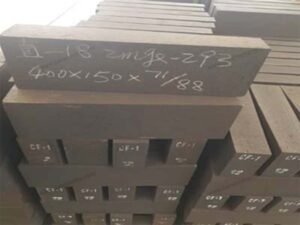
Direct-bonded magnesia-chrome bricks 3.0~3.3 g/cm³, ordinary sintered type 2.8~3.0 g/cm³, high-chromium type (Cr₂O₃≥20%) up to 3.2~3.4 g/cm³. Higher density indicates a denser structure and stronger resistance to slag penetration and erosion.
≥10MPa, some high-chromium premium products ≥15MPa. One of the core indicators, reflecting the resistance to flexural deformation under high-temperature conditions. In order to preventing spalling and breakage due to insufficient structural strength at high temperatures.
≥1500℃, direct-bonded type ≥1550℃, high-chromium type can reach over 1600℃. A core high-temperature mechanical indicator, because reflecting the product’s resistance to deformation and collapse under high-temperature loads, ensuring structural integrity under heavy load conditions.
≥15 cycles, with some customized grades suitable for rapid temperature changes exceeding ≥20 cycles. This reflects the product’s resistance to rapid heating and cooling. So preventing thermal shock spalling during furnace start-up, shutdown, and fluctuations in operating conditions.
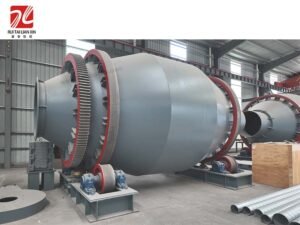
Magnesia-chrome bricks are high-performance alkaline refractory materials, primarily composed of MgO and Cr₂O₃. They possess high refractoriness, strong resistance to alkaline slag erosion, and excellent high-temperature volume stability. Therefore making them widely used in high-temperature conditions in industries such as steel, cement, and non-ferrous metallurgy.
In the steel industry, they are suitable for the furnace walls, furnace bottoms, and tapholes of electric furnaces, converters, and AOD refining furnaces, where strong erosion occurs.
In the cement industry, they are used in the transition and firing zones of rotary kilns.
They can also be applied to critical locations in complex slag-system kilns such as copper-nickel smelting furnaces and glass melting furnaces. Different chromium content grades can be matched to different erosion intensities and temperature application scenarios, making them a core lining material for high-temperature, heavy-load alkaline conditions.