Address
Building 1, Zone 1, Greenland Binhu International City, Zhengzhou, Henan, China
Work Hours
Monday to Friday: 9AM - 7PM
Weekend: 10AM - 6PM
Address
Building 1, Zone 1, Greenland Binhu International City, Zhengzhou, Henan, China
Work Hours
Monday to Friday: 9AM - 7PM
Weekend: 10AM - 6PM

Kiln hole formation is a common fault in industrial production, directly affecting production efficiency and safety. Often, the root cause is not the kiln structure itself, but the improper selection or use of refractory bricks.
The direct cause of the hole phenomenon is often the failure of the refractory material.
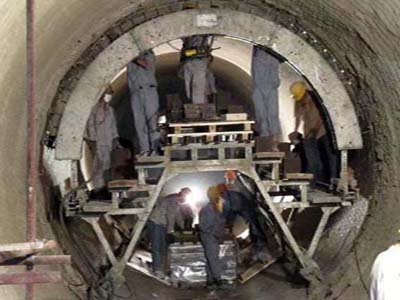
First, long-term high-temperature operation will cause thermal stress inside the refractory bricks, causing loose structure, cracks and even spalling.
Secondly, the chemical media (such as slag, gas, and dust) present in the furnace will continuously erode the surface of the refractory material and accelerate the loss.
In addition, improper joint treatment or insufficient expansion joints during construction can easily become weak points when the temperature fluctuates, leading to local damage.
Therefore, when diagnosing the cause of the hole, the performance of the refractory bricks must be the first item to be checked.
Refractory bricks, as the “inner liner” of the furnace, undertake three key functions: thermal insulation, corrosion resistance and structural support.
First of all, high-quality refractory materials can effectively block the transfer of high temperature to the furnace body, significantly reducing energy consumption and protecting the furnace shell structure.
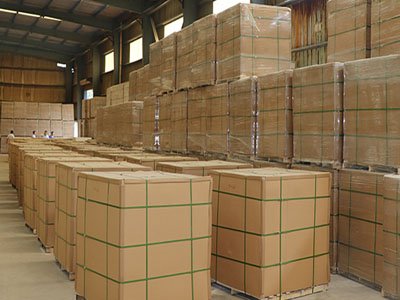
Secondly, its chemical stability determines its corrosion resistance. For example, magnesia bricks are required in alkaline environments, while siliceous bricks are required in acidic environments.
More importantly, good thermal shock resistance can reduce the occurrence of cracks caused by sudden temperature changes, thereby significantly extending the service life.
These characteristics jointly determine whether the furnace can achieve long-term stable operation.
Choosing the right refractory bricks is the key to avoiding holes.
First, the upper temperature limit of the kiln must be accurately assessed, which is the primary basis for model selection. Refractory bricks of different materials have clear temperature resistance ranges.
For example, clay bricks are generally suitable for medium- and low-temperature environments below 1300°C. High-alumina bricks (Al₂O₃ content 48%-75%) can withstand temperatures between 1400°C and 1770°C. Corundum bricks (Al₂O₃ > 90%) or magnesia bricks (MgO > 85%) can withstand ultra-high temperatures exceeding 1800°C.
Secondly, the chemical properties of the medium in the furnace must be fully understood to avoid harmful reactions between the material and the medium.

For example, in an environment with high alkali or iron content, magnesia-chrome bricks or spinel bricks with stronger resistance to alkali corrosion or iron slag corrosion should be selected. In a sulfur-containing or reducing atmosphere, the stability of silica bricks or silicon carbide bricks needs to be considered.
Furthermore, attention should be paid to the structural characteristics of the kiln and the requirements of special parts. Some complex shapes or areas prone to wear may require special-shaped bricks or castables for targeted matching.
Finally, construction conditions (such as masonry method and expansion joint setting) are also factors that cannot be ignored.
Therefore, the selection process requires comprehensive collection of operating parameters. If necessary, seek technical support from professional refractory suppliers to ensure that material performance closely matches actual needs.