Address
Building 1, Zone 1, Greenland Binhu International City, Zhengzhou, Henan, China
Work Hours
Monday to Friday: 9AM - 7PM
Weekend: 10AM - 6PM
Address
Building 1, Zone 1, Greenland Binhu International City, Zhengzhou, Henan, China
Work Hours
Monday to Friday: 9AM - 7PM
Weekend: 10AM - 6PM

In high-temperature industries such as metallurgy, building materials, and chemicals, the performance of refractory bricks directly determines kiln efficiency. High-quality magnesia bricks, with their outstanding advantages, have become the preferred choice of many companies. Their core properties not only far surpass those of traditional refractory bricks, but also offer significant competitiveness compared to similar products such as high-alumina bricks and clay bricks. The following detailed comparison analyzes the core advantages of high-quality magnesia bricks.
High-quality magnesia bricks are made from high-purity magnesia sand with a magnesium oxide content exceeding 90%. They have a melting point exceeding 2800°C and can operate stably at temperatures exceeding 1600°C for extended periods. In contrast, clay bricks have a melting point of only around 1580°C and tend to soften and deform in environments above 1200°C. High-alumina bricks have a maximum temperature resistance of approximately 1450°C, making them inadequate for extremely high-temperature environments such as steel converters and cement rotary kiln firing zones. The high-temperature stability of high-quality magnesia bricks makes them irreplaceable in high-temperature industries.
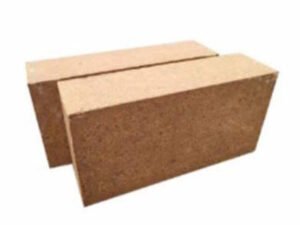
Molten slag and acidic or alkaline gases in industrial furnaces are extremely corrosive to refractory bricks. High-quality magnesia bricks, through a special sintering process, form a dense crystal structure with low porosity, effectively blocking the penetration of corrosive media. Compared to high-alumina bricks, their resistance to alkaline slag is over 30% higher. In complex corrosive environments, the service life of ordinary clay bricks is only one-fifth to one-third that of high-quality magnesia bricks. This feature significantly reduces the frequency of kiln maintenance and replacement.
Under high-temperature conditions, refractory bricks must withstand material impact and furnace vibration. High-quality magnesia bricks, formed under high pressure and sintered at high temperatures, achieve a compressive strength of over 100 MPa at room temperature, maintaining structural integrity even at high temperatures. Compared to ordinary refractory bricks, their wear resistance is significantly improved. In environments subject to intense material erosion, such as cement rotary kilns, high-quality magnesia bricks can achieve a service life of 2-3 years, compared to 8-12 months for ordinary high-alumina bricks and less than 6 months for clay bricks.
Frequent kiln starts and stops in industrial production can easily cause refractory bricks to crack and spall due to thermal expansion and contraction. High-quality magnesia bricks, through optimized formulations, have a low thermal expansion coefficient and excellent thermal shock resistance. In contrast, high-alumina bricks are prone to cracking under repeated temperature fluctuations, and clay bricks can even spall. High-quality magnesia bricks can easily meet the needs of intermittent production, reducing production losses caused by material damage.
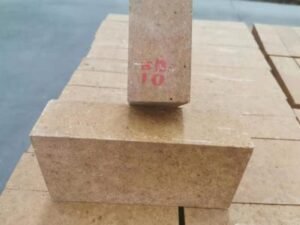
Therefore, when purchasing, companies should carefully consider their operating conditions and choose high-quality magnesia bricks from reputable manufacturers to ensure efficient and long-term kiln operation.