Address
Building 1, Zone 1, Greenland Binhu International City, Zhengzhou, Henan, China
Work Hours
Monday to Friday: 9AM - 7PM
Weekend: 10AM - 6PM
Address
Building 1, Zone 1, Greenland Binhu International City, Zhengzhou, Henan, China
Work Hours
Monday to Friday: 9AM - 7PM
Weekend: 10AM - 6PM

Today I’d like to share a case study: our Indian client’s 10-ton copper smelting converter. Judging from the drawings, this is a converter. Generally, a furnace consists of a working layer, an insulation layer, and a permanent lining. The working layer is crucial for furnace operation, determining copper smelting efficiency. This working layer is constructed of refractory bricks. So selecting the right refractory bricks based on the furnace’s characteristics is very important.
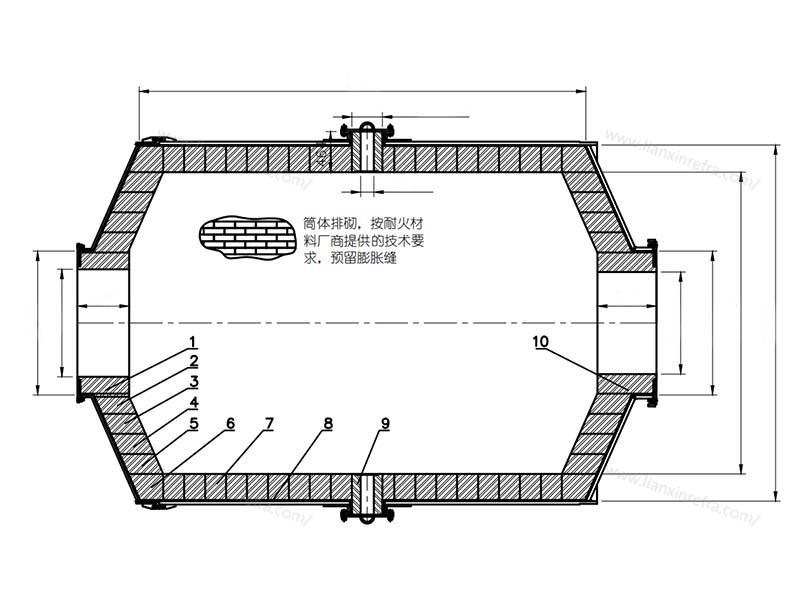
However, the service life of refractory bricks is related to many factors, such as raw materials, processes, and operating time. An oxidation reaction occurs in the client’s copper smelting furnace, producing matte, silica, and oxygen, which in turn generate crude copper, slag, and sulfur dioxide gas. The furnace temperature during operation is between 1150-1300 degrees Celsius.
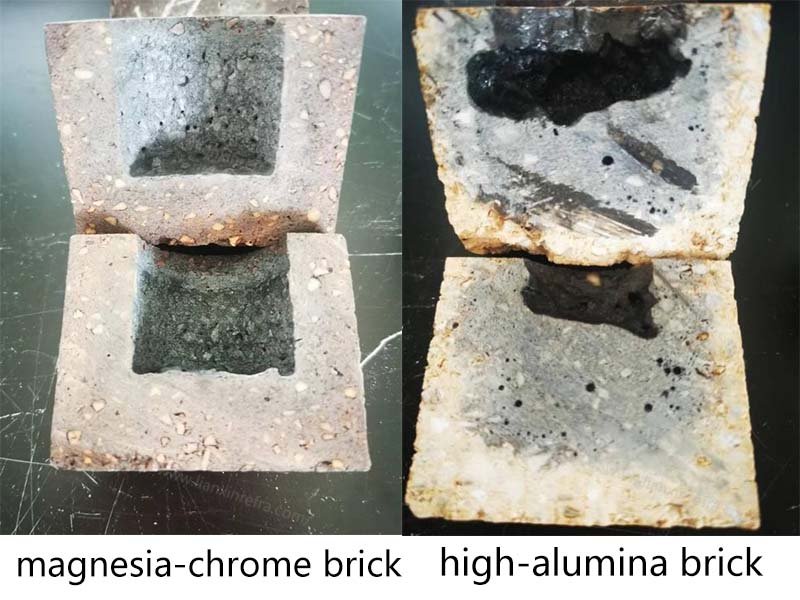
We recommended magnesia-chrome bricks for the overall lining to our client. The reason for choosing magnesia-chrome bricks is their excellent alkali resistance, making them the most cost-effective and suitable option for the client. Furthermore, magnesia-chrome bricks have stronger slag and erosion resistance than high-alumina bricks, resulting in a longer service life. The image shows a comparison of slag erosion resistance test results between high-alumina bricks and magnesia-chrome bricks conducted at our factory.
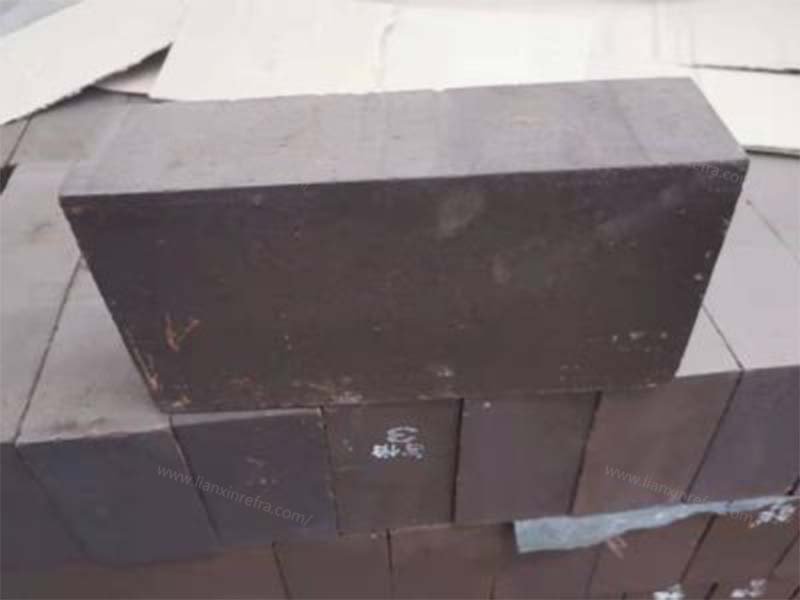
The test results strongly demonstrate that magnesia-chrome bricks have stronger slag and erosion resistance than high-alumina bricks. The client ultimately chose to use magnesia-chrome bricks. and after a period of use, they expressed great satisfaction with the results.