Address
Building 1, Zone 1, Greenland Binhu International City, Zhengzhou, Henan, China
Work Hours
Monday to Friday: 9AM - 7PM
Weekend: 10AM - 6PM
Address
Building 1, Zone 1, Greenland Binhu International City, Zhengzhou, Henan, China
Work Hours
Monday to Friday: 9AM - 7PM
Weekend: 10AM - 6PM

The quality of refractory brick construction directly determines the service life of the kiln. Different furnace types have significantly different operating conditions, requiring tailored construction techniques.
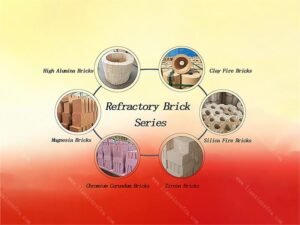
Henan Ruitai Lianxin Refractory Materials Co., Ltd., with years of experience in the industry, offers customized construction solutions for various furnace types, providing high-alumina bricks, magnesia-alumina spinel bricks, and silica-mullite bricks to ensure stable masonry performance.
Wet construction is the primary method, with strict control of mortar joint width within 2mm. Construction workers advance the brickwork from the kiln outlet to the inlet, working in sections along the baseline to ensure the brick ring remains concentric with the kiln body.
High-alumina bricks with anti-stripping properties are preferred in the preheating zone, magnesia-alumina spinel bricks are used in the firing zone, and ordinary high-alumina bricks can be used in the cooling zone, precisely matching the operating requirements of each part.
Longitudinal expansion space is reserved in each ring, filled with 2mm thick cardboard. Construction workers precisely select locking bricks, push them in from the side, and wedge them tightly with steel plates. The locking bricks in adjacent rings should be staggered by 2-3 bricks.
Pre-construction of the spherical dome is required before construction, using the center line of the furnace roof as a reference to control the radius. Construction workers lay the arch foot bricks tightly against the fixing ring, prioritizing the use of composite bricks at the junctions to improve overall sealing.
The top-fired hot blast stove follows the principle of laying the outer ring first, followed by the inner ring, with construction workers alternating between inner and outer ring work.
The furnace roof plug bricks and surrounding areas can be cast on-site using high-temperature refractory castable.
The furnace body must be thoroughly cleaned before construction to ensure the surface is free of dust and rust. Construction personnel should mix refractory mortar as needed, using specialized tools for different mortar materials to avoid cross-contamination.
Straight walls are constructed using a staggered joint method, and the arched roof uses a circumferential joint method. The size of the processed bricks must not be less than 1/2 of the original brick.
Henan Ruitai Lianxin provides a one-stop service from refractory brick selection and construction guidance to quality acceptance. Our core products, anti-sparging high-alumina bricks, magnesia-alumina spinel bricks, and magnesia-chrome bricks, can be precisely adapted to different furnace types and operating conditions.
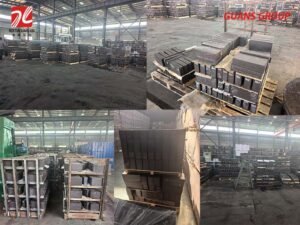
If you have different needs for refractory brick selection and construction for different furnace types and locations, please contact us! Our professional team will customize a solution just for you, building a solid safety barrier for kiln operation.