Address
Building 1, Zone 1, Greenland Binhu International City, Zhengzhou, Henan, China
Work Hours
Monday to Friday: 9AM - 7PM
Weekend: 10AM - 6PM
Address
Building 1, Zone 1, Greenland Binhu International City, Zhengzhou, Henan, China
Work Hours
Monday to Friday: 9AM - 7PM
Weekend: 10AM - 6PM

Refractory bricks are core consumables in high-temperature industries such as metallurgy and building materials. Their manufacturing requires multiple precise processes to ensure high-temperature resistance, corrosion resistance, and wear resistance.
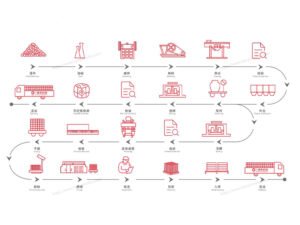
Raw material selection is fundamental, primarily using natural refractory materials such as high-alumina bauxite, silica, and magnesia, combined with binders and additives such as clay and graphite. The raw materials need to be crushed and ground into fine powder, then sieved to remove impurities. In order to ensuring particle uniformity, which directly affects the density and strength of the brick.
Small and medium-sized bricks are often pressed using a press, where high pressure tightly binds the raw material particles. Large or irregularly shaped bricks are cast, where the raw material slurry is poured into a mold, allowed to solidify, and then demolded. After molding, drying is required, achieved at temperatures ranging from room temperature to 120°C. Gradually removing moisture to prevent cracking during sintering due to moisture evaporation.
The dried brick blanks are fed into a tunnel kiln and fired at temperatures above 1500℃. In order to causing a physicochemical reaction in the raw materials to form a robust crystalline structure and dense texture. Precise temperature control is crucial during firing. The rhythm of heating, holding, and cooling directly affects the high-temperature resistance of the bricks.
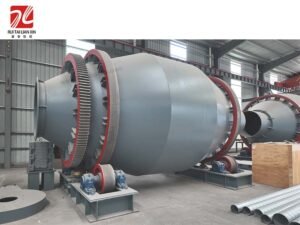
After cooling, the bricks are inspected and ground. Qualified refractory bricks are then ready for use, providing a high-temperature protective barrier for equipment such as blast furnaces, electric arc furnaces, and kilns.