Address
Building 1, Zone 1, Greenland Binhu International City, Zhengzhou, Henan, China
Work Hours
Monday to Friday: 9AM - 7PM
Weekend: 10AM - 6PM
Address
Building 1, Zone 1, Greenland Binhu International City, Zhengzhou, Henan, China
Work Hours
Monday to Friday: 9AM - 7PM
Weekend: 10AM - 6PM

Tunnel kilns are core equipment for continuous firing in industries such as ceramics and building materials. They are subjected to high temperatures, airflow erosion, and chemical corrosion for extended periods. As a lining material, the performance of fire bricks directly determines the operating efficiency and maintenance cycle of a kiln.
Tunnel kilns are typically divided into three temperature zones: preheating, firing, and cooling.
The firing zone temperature can reach over 1300℃. The kiln not only experiences drastic temperature fluctuations, but also corrosive gases produced by fuel combustion, as well as mechanical friction between the products and the kiln furniture.
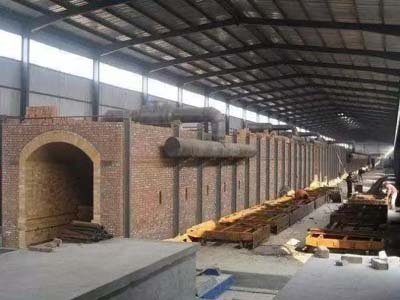
Therefore, the lining material must have high fire resistance, thermal shock resistance, and wear resistance. If the materials are not selected properly, it may increase the frequency of maintenance or even damage the kiln structure, thus affecting the overall thermal efficiency.
Refractory bricks play three main roles in tunnel kilns:
(1) Resist high temperature;
(2) Protect the metal frame;
(3) Maintain a uniform temperature field inside the kiln.
First, the working environment of tunnel kilns is usually accompanied by long-term high-temperature erosion. This requires the use of high-quality refractory bricks for the lining to ensure that the material has sufficient compressive strength and creep resistance.
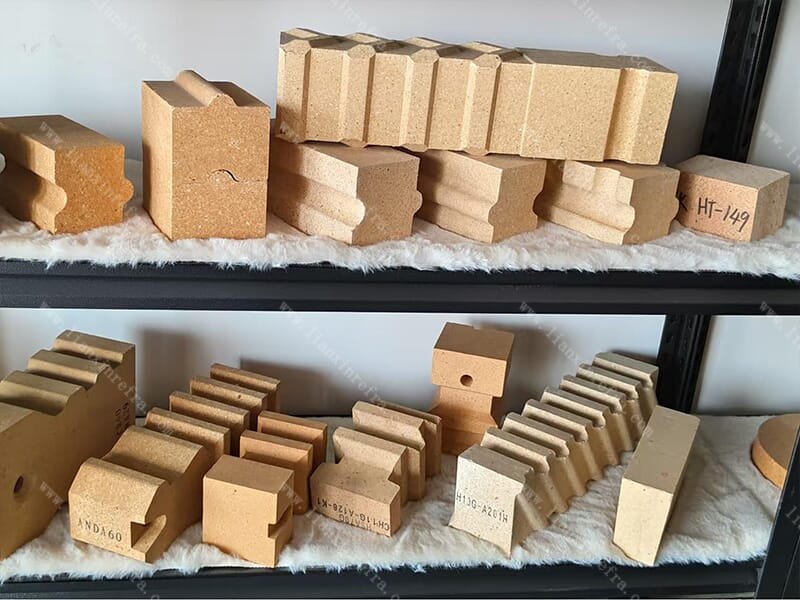
Secondly, tunnel kilns require periodic trolley operations. Therefore, refractory bricks also need to withstand mechanical stress and thermal shock caused by rapid temperature changes.
If the thermal shock stability of refractory bricks is insufficient, it can easily lead to the lining peeling and cracking, thus forcing the kiln to be shut down for maintenance.
Therefore, the selection of refractory bricks with strict physical and chemical properties is directly related to the continuity and safety of production.
The core evaluation indicators for high-quality refractory bricks mainly include the following:
(1) Refractoriness;
(2) Load softening temperature;
(3) Compressive strength at room temperature;
(4) Thermal shock resistance.
Among them, refractoriness reflects the material’s ability to resist high-temperature melting, while load softening temperature reflects its structural stability under the combined action of pressure and high temperature.
In addition, thermal shock resistance determines whether refractory bricks can withstand frequent temperature rises and falls in the kiln.

High-quality fire brick manufacturers usually provide the above parameters in their product manuals. Purchasers can use this information to select product categories that meet their operational requirements. Purchasers can use this information to select product categories that meet their operational requirements.
At the same time, the apparent porosity and erosion resistance of refractory bricks should not be ignored. Because they directly affect the service life of the kiln lining.
Of course, scientific material selection and reliable supply are the two guarantees for the efficient operation of tunnel kilns. Choosing an experienced refractory brick supplier with strict quality control will lay a solid foundation for the long-term operation of the kiln.