Address
Building 1, Zone 1, Greenland Binhu International City, Zhengzhou, Henan, China
Work Hours
Monday to Friday: 9AM - 7PM
Weekend: 10AM - 6PM
Address
Building 1, Zone 1, Greenland Binhu International City, Zhengzhou, Henan, China
Work Hours
Monday to Friday: 9AM - 7PM
Weekend: 10AM - 6PM

Glass furnaces are the core equipment in glass production, operating at temperatures exceeding 1500℃ for extended periods, and enduring multiple challenges including molten glass erosion and thermal shock.
Fire bricks, as a crucial lining material in glass furnaces, directly determine the furnace’s lifespan, production stability, and the quality of the glass products.
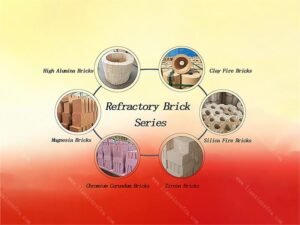
Different operating conditions in different areas necessitate different performance requirements for refractory bricks. Therefore, proper matching and application are key to ensuring efficient production.
The melting section is the core area where glass raw materials melt, reaching temperatures as high as 1600℃. It must withstand the intense erosion from molten glass and high-temperature gases.
Fused zirconia-corundum bricks are the preferred choice here. Their high zirconium content and extremely strong resistance to molten glass erosion and penetration make them the core protective material for the walls and bottom of the melting section.
Meanwhile, high-alumina bricks can be used for the kiln roof, relying on their excellent high-temperature resistance and structural stability to ensure the sealing and load-bearing capacity of the kiln roof.

The regenerator chamber is responsible for recovering waste heat from flue gas, improving energy utilization efficiency. Its operating conditions are mainly characterized by high-temperature airflow erosion and temperature fluctuations.
Clay bricks and mullite bricks are commonly used here. Clay bricks offer high cost-effectiveness and good thermal shock resistance. Mullite bricks have excellent thermal conductivity and strong wear resistance, making them suitable for the regenerator chamber grid and extending equipment maintenance cycles.
The discharge port and flow channel directly contact the flowing high-temperature molten glass, experiencing severe erosion.
In addition to traditional fused zirconia corundum bricks, we can also choose magnesium aluminate spinel bricks. These bricks combine the corrosion resistance of magnesium oxide with the thermal shock resistance of alumina, effectively coping with the high-speed scouring of molten glass and ensuring stable output. This effectively copes with the high-speed erosion of molten glass, ensuring stable discharge.
High-quality refractory bricks significantly improve the operational stability of glass kilns. When selecting bricks, key indicators such as refractoriness, erosion resistance, and thermal shock resistance should be emphasized.
For example, the impurity content of fused zirconia-corundum bricks needs to be controlled, and the alumina content of high-alumina bricks must meet standards. Furthermore, the proper combination of different brick materials is crucial.
For instance, using high-grade erosion-resistant bricks in the melting section and cost-effective wear-resistant bricks in the regenerator can achieve a balance between cost and performance. The efficient operation of a glass kiln relies on the support of high-quality fire bricks.
We have been deeply involved in the refractory materials field for many years. That can provide a full range of fire brick products suitable for glass kilns. That including fused zirconia-corundum bricks, high-alumina bricks, mullite bricks, clay bricks, and magnesia-alumina spinel bricks. We also have a professional selection team to customize solutions based on kiln conditions.
Whether you are building, repairing, or renovating a glass kiln, please contact us at any time. Get one-on-one technical consultation and product quotes, and let high-quality fire bricks build a solid defense for your production and improve efficiency!