Address
Building 1, Zone 1, Greenland Binhu International City, Zhengzhou, Henan, China
Work Hours
Monday to Friday: 9AM - 7PM
Weekend: 10AM - 6PM
Address
Building 1, Zone 1, Greenland Binhu International City, Zhengzhou, Henan, China
Work Hours
Monday to Friday: 9AM - 7PM
Weekend: 10AM - 6PM

Fire bricks, with their excellent high-temperature resistance, erosion resistance, and structural stability, have become the first choice for many high-temperature scenarios. Compared to ordinary wall bricks such as red bricks and blue bricks, or decorative bricks such as permeable bricks and antique bricks, refractory bricks focus more on protection and assurance in extreme environments, making their application value unique.
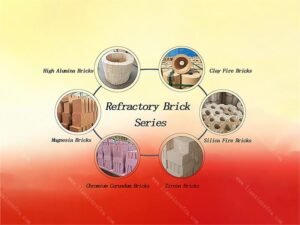
Building materials production often involves high-temperature processes, and the application of fire bricks directly affects production efficiency and product quality.
The core equipment in cement production is the rotary kiln, where the temperature reaches over 1400℃. Ordinary bricks will quickly soften and deform under such conditions, while high-alumina fire bricks and magnesia-alumina spinel fire bricks can effectively resist high-temperature erosion.
They are installed inside the kiln lining, reducing heat loss and preventing the kiln body from being eroded by cement clinker. High-quality fire bricks can extend the service life of rotary kilns and reduce equipment maintenance costs.
Glass furnaces need to maintain a high temperature of around 1500℃ for extended periods. Zirconia-corundum fire bricks, due to their resistance to molten glass corrosion, have become the core building material for furnace pool walls and flow channels.
In ceramic firing kilns, clay fire bricks, with their excellent thermal shock resistance, are suitable for the kiln’s heating and cooling cycles, ensuring uniform firing of ceramic blanks. In contrast, ordinary ceramic bricks can only be used for room temperature decoration and cannot withstand such high-temperature environments.
Besides the production process, fire bricks also play an important role in building protection and special building material scenarios.
In high-rise buildings and industrial plants, refractory bricks are key fireproof building materials in firewalls, flues, and other areas. It can maintain structural integrity under high temperatures during a fire, slowing the spread of fire.
Compared to passive fire-retardant materials such as fire-retardant coatings, refractory bricks offer longer fire resistance and more stable protection. In some public buildings, chimneys and boiler room walls are constructed using a combination of refractory bricks and insulating bricks, balancing fire resistance and energy efficiency.
In special projects such as waste incineration plants and waste heat power plants, the flue gas and materials are highly corrosive. And temperatures fluctuate greatly. Special fire bricks, such as silica fire bricks and silicon carbide fire bricks, can resist acid and alkali corrosion and temperature shocks. Ensuring the normal operation of equipment.
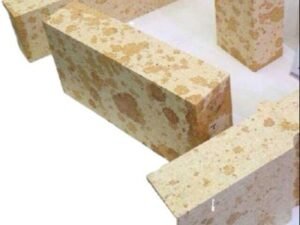
In these scenarios, the performance of refractory bricks directly determines the stability and safety of the project and cannot be replaced by ordinary bricks.
The application of refractory bricks in the building materials field highlights their irreplaceable core value. Whether it’s protecting core equipment in building material production, or fireproofing buildings and constructing special projects. High-quality refractory bricks are crucial for improving the safety and durability of the environment.
If you require suitable fire brick solutions for building material production and construction. Or would like to learn more about the detailed parameters and pricing of high-alumina fire bricks, zirconia-corundum fire bricks, and other related products, please feel free to contact us.
We have a professional technical team that can customize products according to your specific needs. Providing reliable building material support for your projects.